Does a French drain actually work, and how can you tell?
A French drain works when it sits where the water actually travels, has enough fall to carry it away and has a place to let it out. When one of those is missing, it can hold water next to the house instead of moving it. The way to tell is to measure the soil the drain is meant to protect. If that side of the house dries back to its usual level after rain about as fast as the other sides, the drain is doing its job. If it still stays wet for days, the water is getting past it or the drain is not draining.
Updated November 8, 2026
What a French drain does
A French drain is a trench filled with gravel around a perforated pipe, usually wrapped in filter fabric. Water moving through the soil or across the surface finds the gravel, which is the easiest path, drops into the pipe and runs downhill to an outlet. Along a foundation, the idea is to catch water before it reaches the slab or runs under a pier and beam house.
It is one of the most common drainage fixes a drainage contractor installs, often together with downspout lines and some regrading.
Why a French drain might not work
The most common reason is placement. If the water that soaks the foundation comes from a downspout or a slope on another side, a drain along the wrong wall does little. The pipe also needs a steady fall to the outlet. A section that runs flat or uphill holds water, and an outlet that is buried, crushed or blocked by grass means the water has nowhere to go.
Over the years, fine soil can clog the fabric and gravel, roots can grow into the pipe, and a downspout tied into the drain can send it more water than it can carry in a heavy storm. On clay, water also moves slowly through the soil, so a drain catches surface water well and soil water more slowly.
Signs your French drain is not working
Look for water standing in the same spots it did before the drain went in, an outlet that stays dry after a hard rain, soggy ground or a sunken line over the trench, and water still getting under a pier and beam house. If the outlet runs but the side of the house stays wet anyway, the drain may be catching water that was never the problem.
Measuring a French drain with soil sensors
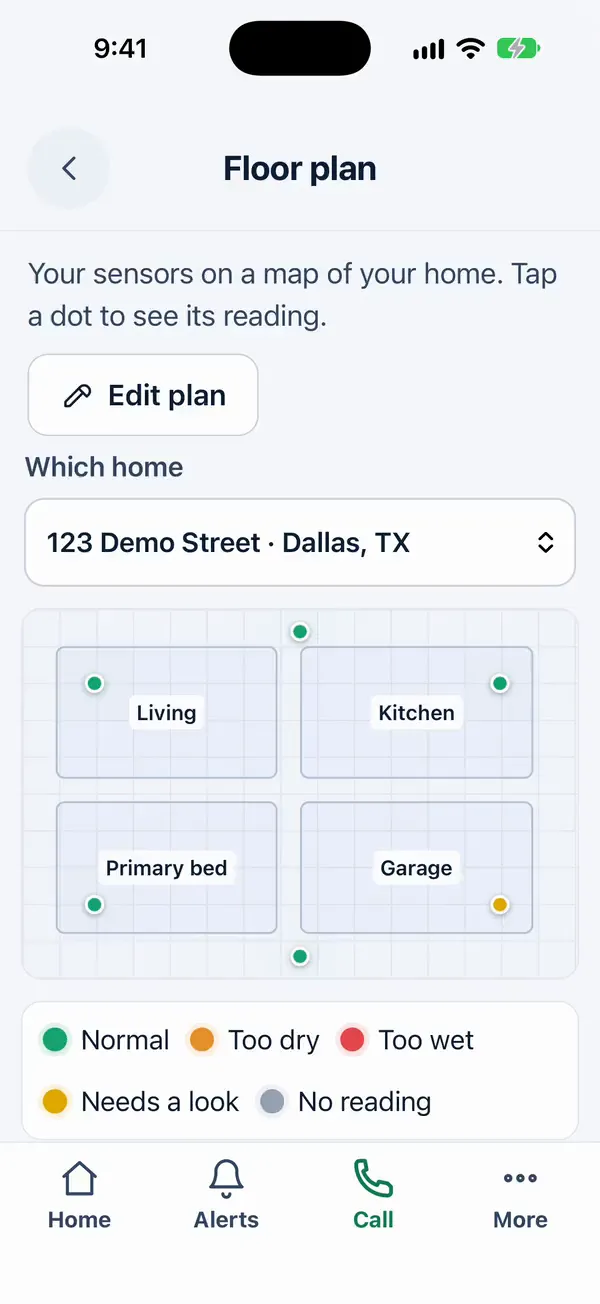
The surest test is the soil the drain is meant to protect. With MoisturePilot, probes about a foot down sit along that side of the house, with one out in the open yard as a control. Each probe is compared with its own usual level, and the app flags a spot that stays well above that level after the rain has stopped.
Before the drain goes in, watch what happens after a storm. Note how many days the problem side stays wetter than usual while the yard probe dries back down. After the drain goes in, watch the next storm the same way. The floor plan replays the last 14 days, so you can look back through a storm and the days after it. The app does not export the history, so write down what you see or take a screenshot. If that side now dries back about as fast as the others, the French drain foundation work did its job.
Can a French drain dry the soil too much?
On clay, possibly. A drain that works well keeps water away from one side of the house, and in a long dry spell that side can end up drier than the rest. Uneven moisture is what moves a slab, so it is worth watching. MoisturePilot shows an uneven moisture alert to watch when one side reads 18 points drier than another, and says it needs attention at 28 points.
If the side by the drain runs dry in summer, a soaker hose on that side helps even it out. Our guide on whether you are watering your foundation enough covers how to check that.
What to ask before a French drain goes in
Ask the contractor where they think the water is coming from and why the drain goes where they put it. Ask where the outlet will be, how much fall the pipe has, whether downspouts tie into it, and whether it has a cleanout. Then ask how you will both know it worked. A clear answer to that last question, and a measurement before and after, is the best protection you have for the money.
Questions people ask
Do French drains work in clay soil?
They can, but water moves slowly through clay, so a French drain in clay catches surface water well and soil water more slowly. It needs good fall and a clear outlet. Measuring the soil on that side after rain shows whether it is helping.
How do I know if my French drain is clogged?
Water standing where it used to before the drain went in, an outlet that stays dry after a hard rain and soggy ground over the trench are common signs. A drainage contractor can run a camera or flush the line through a cleanout.
Does a French drain help a foundation?
It helps when water collecting along the house was the problem and the drain sits where that water travels. It does nothing for a plumbing leak, and on clay it can leave one side drier than the others in a drought, so even moisture on every side is the thing to check.
How can I tell if my French drain is working?
Compare how long the soil on that side stays wetter than usual after rain, before and after the drain went in. If it now dries back about as fast as the other sides and the open yard, the drain is working.
More guides
Plain answers about the soil around a house. See all guides.
Foundation drainage
Gutters, downspouts and a yard that slopes away do most of the work. Drains come after that.
Water under the house after rain
Damp soil that dries in a day or two is common. Water that stands or keeps coming back after every storm is worth fixing.
Is your foundation watering enough?
The hose schedule and the yard surface do not show what the clay a foot down is doing. Measuring each side does.
Register your property
Sensors are $60 each, paid once, a regular home needs 6 or more, and monitoring is $20 a month.