When to worry about water under the house after heavy rain
Worry when water stands in the crawl space for more than a day or two, or when the soil under the house stays wet long after the yard has dried. Damp ground under a pier and beam house right after a heavy storm is common, and on its own it is not a sign of damage. Water that comes back after every rain means rain is being sent under the house, usually by gutters, downspouts or a yard that slopes toward it. That is worth fixing, because wet clay under the piers swells and the wood above it starts to rot.
Updated November 8, 2026
What is normal under a house after a storm
A crawl space is open to the weather through its vents and along the skirting, and the soil under it is the same soil as the yard. After a hard rain the ground near the vents and along the outer edge often turns damp. That dampness should fade within a day or two once the rain stops, with the middle of the crawl space staying drier than the edges.
A little dampness that comes and goes with the weather is the crawl space doing what crawl spaces do. The trouble starts when water moves under the house faster than the soil can take it, or when it has no way back out.
Signs the water under the house is a problem
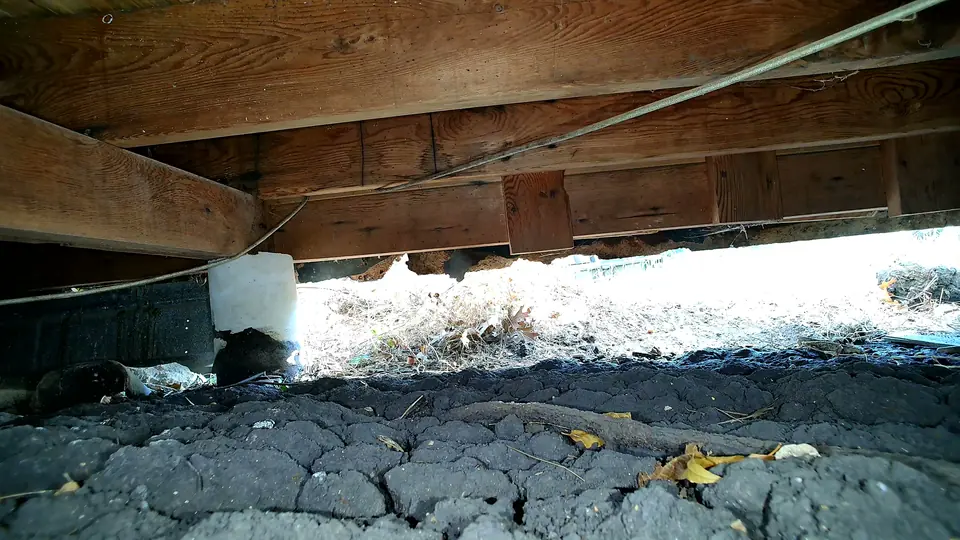
Standing water or puddles you can see from the access door are the clearest sign. Look also for a line of mud or silt showing where water flows in, water marks on the piers or blocks, and insulation sagging or falling from the floor above. Inside the house, a musty smell after rain, floors that feel soft in one area or doors that start sticking after storms all point the same way.
Timing matters too. If the soil under the house is still wet several days after the yard has dried, water is collecting there. If it is wet and there has been no rain at all, the source is probably not rain. A plumbing leak or the AC drain is more likely, and our guide to sweating ductwork covers one of the less obvious causes.
Where the water usually comes from
Most water under a house after rain comes from the roof. A downspout that ends at the wall dumps a whole section of roof right at the foundation, and a clogged gutter overflows along the full length of the house. The next most common cause is grade. A yard, patio or driveway that slopes toward the house sends sheet flow under the skirting, and flower beds edged higher than the surrounding soil hold water against it.
Sprinkler heads aimed at the house, a hose left running and a low lot where water collects from the neighbors are the others. Each one tends to wet the same spot every time, which helps when you go looking.
Why it matters for a pier and beam house
Every pier rests on soil, and on Texas clay that soil swells when wet and shrinks when dry. If one corner gets soaked every time it rains, the piers there ride up and down more than the rest. Over time the floor above it starts to slope, cracks open at door corners and doors stop latching.
Water under the house also raises the humidity of the crawl space air. Damp wood rots, termites like it, and cold ducts start to drip in summer. A crawl space that stays wet after storms usually ends up with more than one of these problems. Our page for pier and beam homes covers what sensors under the house can catch.
How to see it without crawling under
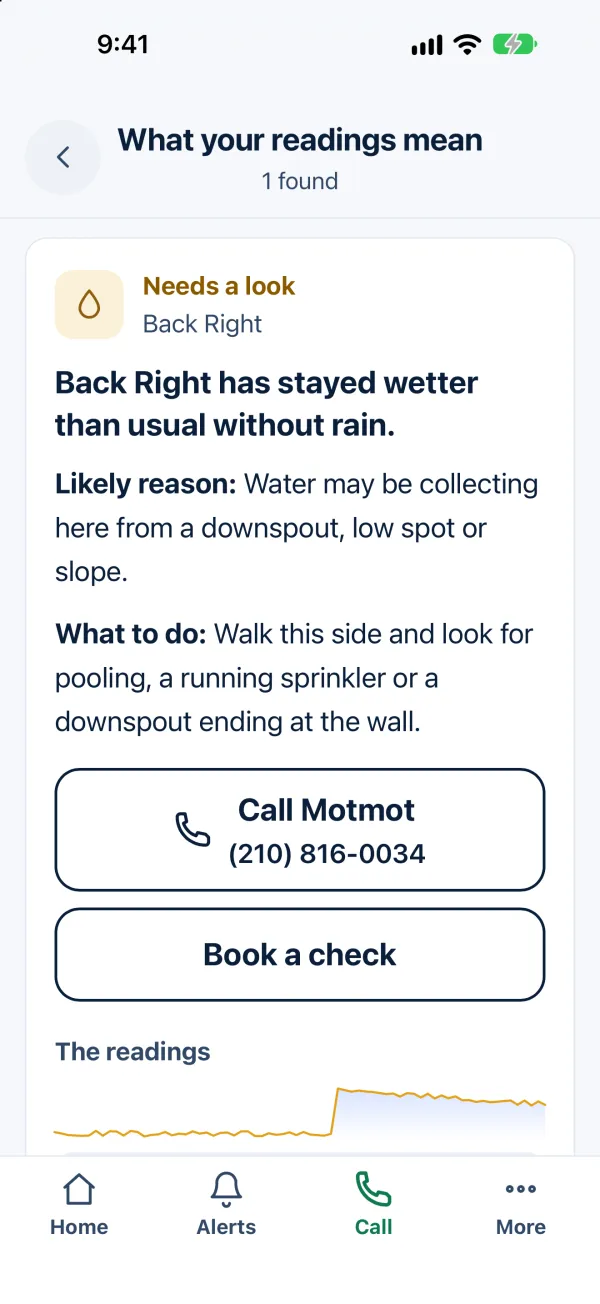
Most owners never go under the house, so the water can sit there for months. Soil moisture sensors in the crawl space read the ground for you. MoisturePilot compares each probe with its own usual level and flags a spot that stays well above that level after the rain has stopped.
A probe out in the open yard shows what the rain alone did. If the yard probe has dried back down and a probe under the house has not, water is collecting under the house. The floor plan replays the last 14 days, so after a storm you can watch how long each spot stays wet. Alerts show in the app, and phone notifications come with the iPhone and Android apps, which are on the way.
What to do about water under the house
Start with the cheapest fixes. Clean the gutters, add downspout extensions that carry water several feet from the house, and pull back beds or mulch that sit higher than the soil around them. Watch the next storm and see where the water still goes.
If water still runs under the house, the yard may need regrading or a drain, and a drainage contractor can tell you which. Our guide on whether a French drain works explains how to check one after it goes in. For the crawl space itself, a crawl space contractor can look at a vapor barrier or a sump. After each fix, the readings under the house should dry back faster after rain than they did before.
Questions people ask
Is it normal to have water under my house after it rains?
Damp soil near the vents and edges right after a heavy rain is common. Standing water, or ground that stays wet for days after the yard has dried, is not. It means rain is running under the house, usually from gutters, downspouts or a yard that slopes toward it.
How long should a crawl space take to dry after rain?
Damp soil near the vents usually dries within a day or two once the rain stops. If the soil under the house is still wet several days after the yard has dried, water is collecting there and the source is worth finding.
Can water under the house damage the foundation?
It can. The piers of a pier and beam house rest on soil, and on clay that soil swells when it gets wet and shrinks when it dries. A corner that gets soaked after every storm moves more than the rest, which can slope floors and crack walls. The water also rots wood and draws termites.
Who do I call for water under my house?
Start with the gutters and downspouts yourself. If water still gets under the house, a drainage contractor looks at grading and drains, and a crawl space contractor looks at vapor barriers and sumps. If the floors have started to slope, have the foundation inspected as well.
More guides
Plain answers about the soil around a house. See all guides.
Sweating ductwork under the house
Cold ducts in humid crawl space air collect water like a glass of iced tea, and the drips soak the soil and wood below.
Normal crawl space moisture
Air humidity, wood moisture and soil moisture are three different numbers. For the soil, your own usual level is the one to watch.
Foundation drainage
Gutters, downspouts and a yard that slopes away do most of the work. Drains come after that.
Register your property
Sensors are $60 each, paid once, a regular home needs 6 or more, and monitoring is $20 a month.