For landlords and investorsFoundation moisture monitoring for rental houses
A tenant is unlikely to call about a damp flowerbed or a downspout that came loose. They call when a door will not close, and by then the soil has been moving for a while. Sensors put the first warning in the owner's hands.
Installed and monitored by our team in Texas.
What it does for a rental
The alert goes to you
The owner gets the alert and can share the house with a property manager or a plumber. The tenant does not have to report anything.
Readings saved by date
Readings are saved with their dates, and the floor plan plays back the last two weeks. If one side starts staying wet, you see when it began.
Several houses under one sign in
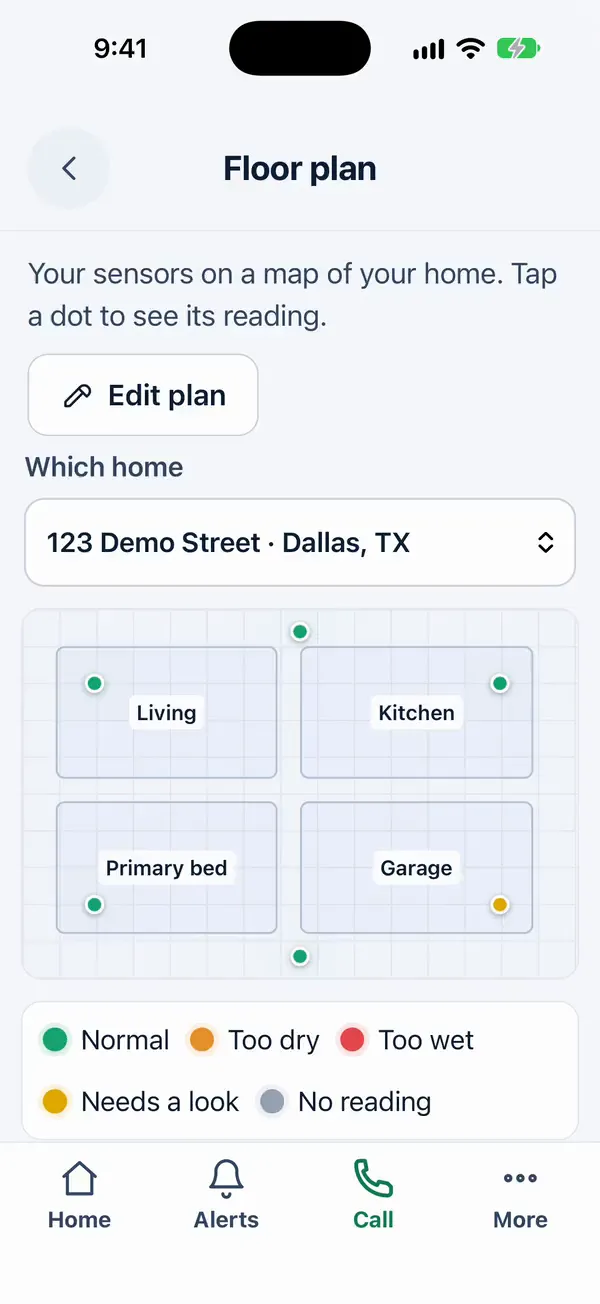
Each house keeps its own sensors and alerts, and the floor plan switches between your homes with one picker. The rest of the app opens on one house, so email us to set several houses up together.
Buying a rental with a foundation history
Investors often buy the house that scared other buyers away. If it has piers, the sensors show whether the cause of the movement was really fixed before you put money into the inside.
On a flip, a few months of steady readings is something you can hand the next buyer along with the repair paperwork.
Questions from landlords
Who pays for foundation damage in a rental house?
In most leases the foundation is the owner's responsibility. If a lease asks tenants to water the yard or report leaks, a dated soil record shows whether that happened. Ask an attorney about your own lease.
Can tenants see the moisture readings?
Only if you share the house with them, and you can remove them from the app at any time.
What does foundation monitoring cost for a rental?
Sensors are $60 each, paid once, and a regular house needs at least 6. Monitoring is $20 a month. If you have several houses, email us about setting them up together.
Other people who use MoisturePilot
Register your property
Sensors are $60 each, paid once, a regular home needs 6 or more, and monitoring is $20 a month.