How a pier and beam foundation works, and what goes wrong
A pier and beam foundation holds a house on short posts, called piers, that carry wooden beams, with the floor framing resting on the beams and a crawl space underneath. It is common in older Texas homes and on lots where a slab would be hard to pour. Its strength is access. A plumber or a repair crew can reach almost everything from the crawl space, and a low corner can often be shimmed or given a new pier. Its weak spots are the soil under each pier and the moisture in the crawl space, which few owners ever see because nobody wants to go under there.
Updated November 8, 2026
What a pier and beam foundation is made of
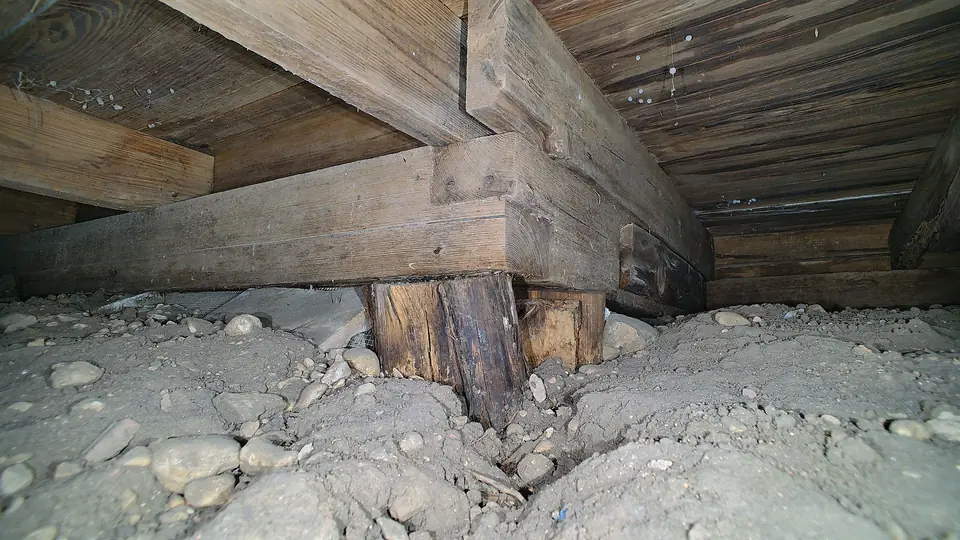
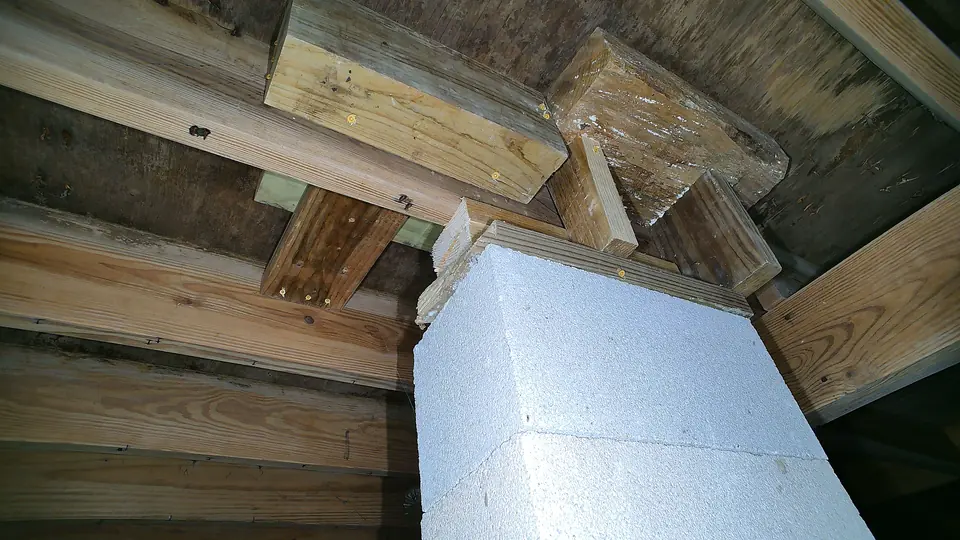
Piers are the posts. Older Texas houses often sit on cedar posts or stacked concrete blocks, and newer ones use poured concrete piers, sometimes drilled several feet into the ground. Each pier stands on a footing or a pad in the soil. Beams run across the tops of the piers, and the floor joists and subfloor rest on the beams. Wood shims fill the small gaps between a pier and its beam, which is how a crew fine tunes the level of the floor.
Around the outside, a perimeter beam or skirting closes in the crawl space, and vents in it let air move through. Under most older Texas houses the crawl space floor is bare soil, sometimes covered with a plastic vapor barrier.
Pier and beam compared with a slab
A slab foundation is one pour of concrete on the ground. When the clay under part of it moves, the whole slab has to bridge the difference, and the cracks show up in the slab, the brick and the drywall. A pier and beam house moves pier by pier instead, so the floor over one or two piers drops or rises while the rest stays where it was.
That makes pier and beam easier to inspect and often less costly to correct, because the crew reaches the problem from below. The tradeoff is the crawl space. It has to stay reasonably dry, it needs air moving through it, and it is where termites, rot and plumbing leaks usually start.
Common pier and beam foundation problems
Sloping floors are the most common complaint. A floor that runs downhill toward one wall or one corner usually means the piers on that side have settled, or the clay under them has dried and shrunk. Doors that drag or swing on their own, gaps at the top of door frames and cracks above doors follow the same pattern.
Bouncy or soft floors are a different problem. They usually point to the wood, such as a joist or beam weakened by rot, a long span between piers that sags, or shims that have crushed or slipped out. Moisture is behind most of the rot, whether it comes from water under the house after rain, a slow leak at a drain line or ductwork that sweats all summer.
Pests and damp air round out the list. Subterranean termites need damp soil and are drawn to damp wood, and a wet crawl space gives them both. A musty smell, mold on the joists and insulation falling from the floor are signs the crawl space is staying too damp.
Why Texas clay moves a pier and beam house
Much of Texas sits on expansive clay that swells when it takes on water and shrinks as it dries. Every pier rests on that clay, so every pier rises and falls with the moisture right under it.
The outer piers feel it first. In a long dry spell the soil along the outside of the house dries and shrinks, while the soil under the middle, shaded by the floor, changes more slowly. The outer piers drop and the middle stays put, which is why so many older Texas floors dip toward the walls. After heavy rain, or with a leak under the house, the opposite happens in one spot. The wet clay swells and the pier above it rides up.
Big trees, flower beds, sprinklers and downspouts all change how wet one side of the house gets, and the floor above follows. Our guide to water under the house after rain covers the drainage side of it.
What a pier and beam foundation repair usually involves
Most repairs start with leveling. The crew lifts the low area with jacks, adds or replaces shims, resets or replaces piers that have rotted, cracked or settled, and adds piers where the spans between them are too long. Rotted beams, sills and joists are replaced or doubled, and deeper piers go in where the soil keeps moving.
A repair holds best when the water problem behind it is fixed as well. That usually means gutters and downspouts that carry water away, ground that slopes away from the house, a repaired leak and a crawl space that dries out between storms. Without that, the same clay keeps moving the same piers.
Watching the soil under the house without crawling under
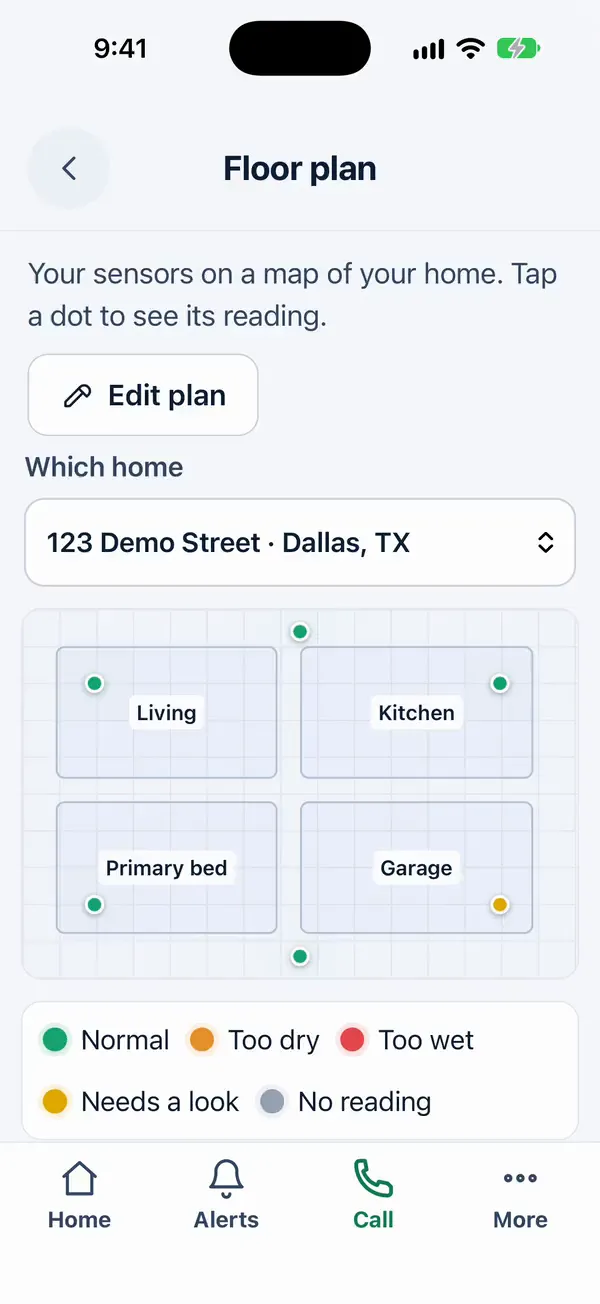
Because most owners never go under the house, the soil under it can change for months without anyone noticing. Soil moisture sensors placed in the crawl space soil at the corners, near the plumbing and at low spots read the ground for you. MoisturePilot compares each probe with its own usual level, flags a spot that gets wetter with no rain or stays well above its usual level after the rain has stopped, and marks one that reads well below its usual level.
Each probe is recorded with what is near it, such as the plumbing, the AC drain or the ducts, so an alert can name the likely reason. One probe out in the open yard shows what the weather alone did. Alerts show in the app, and phone notifications come with the iPhone and Android apps, which are on the way. Our page for pier and beam homes shows where the sensors go.
Questions people ask
Is a pier and beam foundation good?
It is a sound foundation when the crawl space stays dry and the piers are kept level. Its main advantage is access, since the plumbing and the piers can be reached from below. Its main risks are moisture, rot and termites in the crawl space, and piers that move with the clay under them.
How long does a pier and beam foundation last?
Many older Texas homes on pier and beam have stood for generations. How long one lasts depends far more on moisture and upkeep than on age. Dry soil and dry wood keep it sound, while years of water under the house shorten its life.
How do I know if my pier and beam foundation needs repair?
Floors that slope toward one wall or corner, doors that drag or will not latch, gaps above door frames and cracks over doors are the usual signs. Soft or bouncy floors, a musty smell and water under the house after rain point to the moisture and wood problems that often come with them.
How often does a pier and beam house need leveling?
There is no fixed schedule. Many houses need an adjustment some years after a repair as shims settle, and houses on very active clay need it sooner. Keeping the soil under the house evenly moist and well drained stretches the time between adjustments.
More guides
Plain answers about the soil around a house. See all guides.
Water under the house after rain
Damp soil that dries in a day or two is common. Water that stands or keeps coming back after every storm is worth fixing.
Sweating ductwork under the house
Cold ducts in humid crawl space air collect water like a glass of iced tea, and the drips soak the soil and wood below.
Normal crawl space moisture
Air humidity, wood moisture and soil moisture are three different numbers. For the soil, your own usual level is the one to watch.
Register your property
Sensors are $60 each, paid once, a regular home needs 6 or more, and monitoring is $20 a month.