How foundation drainage keeps water away from your house
Foundation drainage is everything that moves rain away from the house before it reaches the soil under it. Gutters catch the roof water, downspouts carry it several feet out, and ground that slopes away from the walls sends the rest toward the street or a swale. Drains such as a French drain or a surface drain handle what grading cannot. On Texas clay the goal is soil that stays evenly moist all the way around the house, because a corner that gets soaked after every storm swells and moves while the rest of the house stays put.
Updated November 8, 2026
What foundation drainage includes
The roof is the biggest source of water. An inch of rain on a 2,000 square foot roof is about 1,250 gallons, and the gutters gather all of it at a few downspouts. Where those downspouts let out decides which part of the foundation gets that water.
The other parts, roughly in the order they matter, are the grade of the yard next to the house, swales that carry water around the house, surface drains and catch basins at low spots, French drains that collect water moving underground, and in a crawl space, a sump that pumps out what still gets in.
How much the ground should slope
Building codes commonly ask for the ground to fall at least 6 inches within the first 10 feet from the foundation. Patios, walks and driveways next to the house should slope away as well. Over the years soil settles along the wall and beds get built up with mulch and edging, so a slope that once carried water away can start holding it against the house.
Downspouts should let out at least five to ten feet from the foundation, onto ground that slopes away. A short extension that ends on flat ground often sends the water right back toward the wall.
Signs your foundation drainage is not working
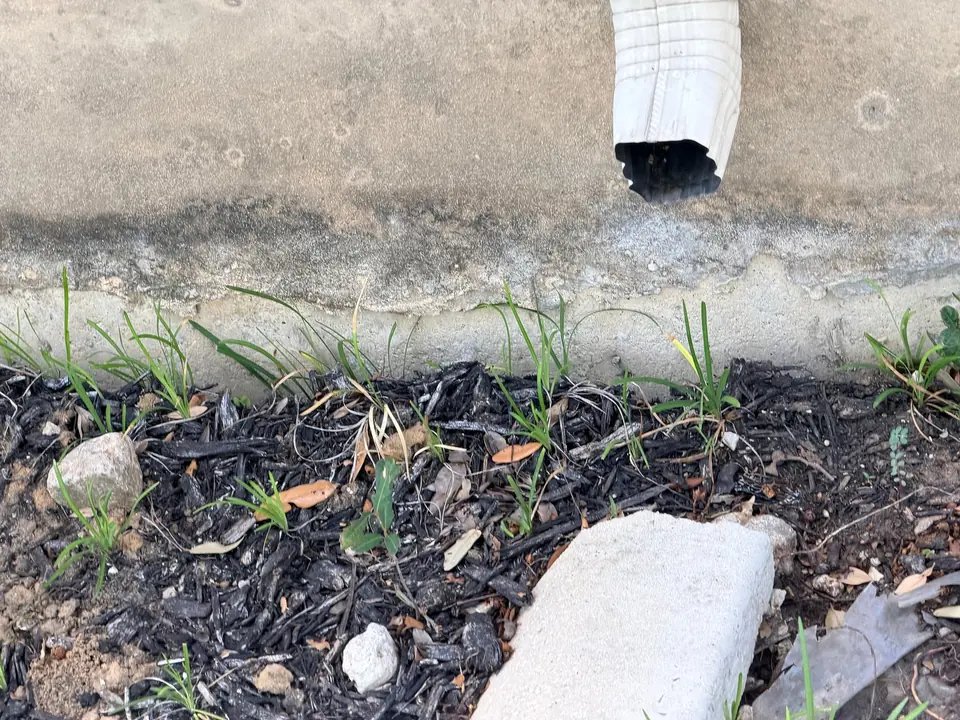
Water standing next to the house a day after rain, soil washed out under a downspout, mud splashed up the siding and gutters spilling over in a hard rain are the signs you can see from the yard. A pier and beam house may also have water under it after storms, and our guide to water under the house after rain covers that case.
Inside the house the signs build more slowly. Cracks that open after a wet season, doors that stick on one side of the house and a musty smell after storms can point to one area getting much more water than the rest.
Why drainage matters so much on Texas clay
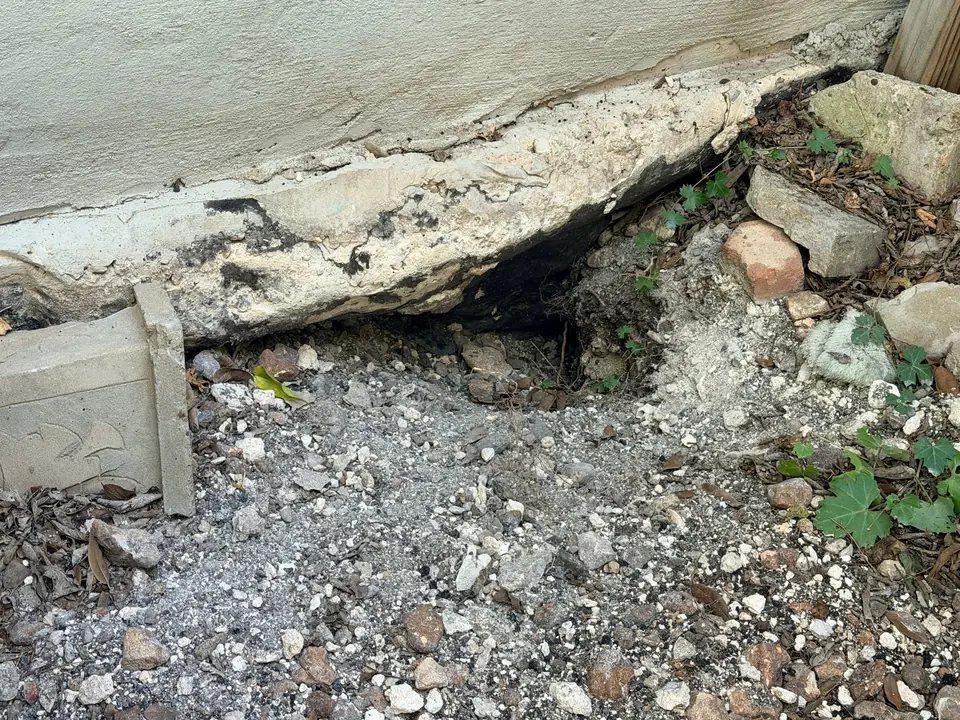
Expansive clay swells when it takes on water and shrinks as it dries. A foundation can ride out slow changes that happen evenly on every side. What cracks a house is the difference between sides, such as one corner soaked by a downspout while the far side bakes in the sun.
That is why drainage and watering go together. Drainage keeps one side from getting too wet after storms, and watering in a dry spell keeps the edges from shrinking away. Our guide on whether your foundation watering is enough covers the dry side.
Fixes for foundation drainage, cheapest first
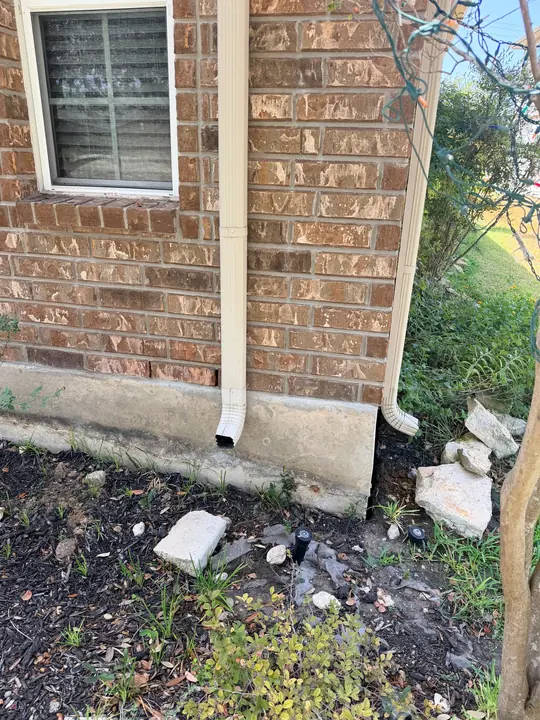
Clean the gutters and make sure they are sized and pitched for the roof. Add downspout extensions or buried lines that carry the water at least five to ten feet out. Pull back mulch and beds that sit higher than the soil around them, and fill low spots along the wall so the ground slopes away again.
If water still collects, a drainage contractor can regrade the yard, cut a swale, set surface drains at the low spots or install a French drain where water moves underground. Our guide on whether a French drain works explains how to check one after it goes in. For a crawl space that still takes on water, a sump can pump it out.
How to tell whether the drainage work did its job
The real test is the next few storms. Walk around the house during a hard rain and watch where the water goes, then look at how fast the ground next to the house dries afterward.
Soil moisture sensors make that easier to see. MoisturePilot compares each probe around the house with its own usual level and flags a spot that stays well above it after the rain has stopped, while a probe out in the open yard shows what the rain alone did. After a fix, the problem corner should dry back like the rest of the yard. Our page for drainage contractors shows how they use the readings with their customers.
Questions people ask
What is the best drainage around a foundation?
Working gutters, downspouts that let out five to ten feet from the house, and ground that falls away from the walls handle most of the water. Swales, surface drains and French drains come next, where grading alone cannot move the water.
How far should the ground slope away from a house?
Building codes commonly ask for a fall of at least 6 inches within the first 10 feet from the foundation. Patios and walks next to the house should slope away as well.
Can poor drainage cause foundation problems?
Yes, on expansive clay. Water that collects at one corner swells the soil there while the rest of the house stays drier, and that uneven movement cracks slabs, brick and drywall. Under a pier and beam house it also moves the piers on the wet side and rots the wood.
How do I know if my yard needs regrading?
Water that stands next to the house a day after rain, soil that slopes toward the wall, and beds or mulch built up above the surrounding ground are the usual signs. A level on a long straight board laid out from the wall shows which way the ground falls.
More guides
Plain answers about the soil around a house. See all guides.
Does a French drain work?
It works when it catches the water, carries it downhill and lets it out. Measuring the soil it protects shows whether it does.
Water under the house after rain
Damp soil that dries in a day or two is common. Water that stands or keeps coming back after every storm is worth fixing.
Is your foundation watering enough?
The hose schedule and the yard surface do not show what the clay a foot down is doing. Measuring each side does.
Register your property
Sensors are $60 each, paid once, a regular home needs 6 or more, and monitoring is $20 a month.