Is foundation settling normal, and how can you tell?
Some foundation settling is normal. Most houses settle a small amount in their first few years as the soil under them packs down under the weight, and on Texas clay the ground also swells and shrinks a little with the seasons. Settling becomes a problem when one part of the house moves more than the rest, either sinking as the soil under it dries or lifting as soaked clay swells. That uneven movement, usually called differential settlement, shows up as cracks that keep getting wider, doors that stop closing and floors that slope. It usually traces back to water, either too much in one spot or too little along one side.
Updated November 8, 2026
Why houses settle
A house is heavy, and the soil under it compresses a little once that weight sits on it. Most of this happens in the first few years. Where a builder brought in fill to level a lot, the fill keeps packing down for a while longer, more so if it was not compacted well when it went in.
Loose soil is the other early source. The soil placed along the slab edge and in the utility trenches during construction is looser than the ground around it, so it settles in the first year or two. A slope that once carried water away can flatten out and start holding it against the house. Our page for new homes covers what to watch in those first years.
Seasonal movement on clay soil
Expansive clay swells when it takes on water and shrinks as it dries. In a dry summer the soil at the edges of the slab gives up water and drops a little, and in a wet spring it swells back. Much of what owners call settling on clay is this seasonal swell and shrink, and it is why a door can stick in August and close fine in March.
Seasonal movement stays small when the soil around the house keeps about the same moisture on every side. It turns into damage when one side dries out or gets soaked far more than the others, because then part of the foundation moves while the rest stays put.
When foundation settling becomes a problem
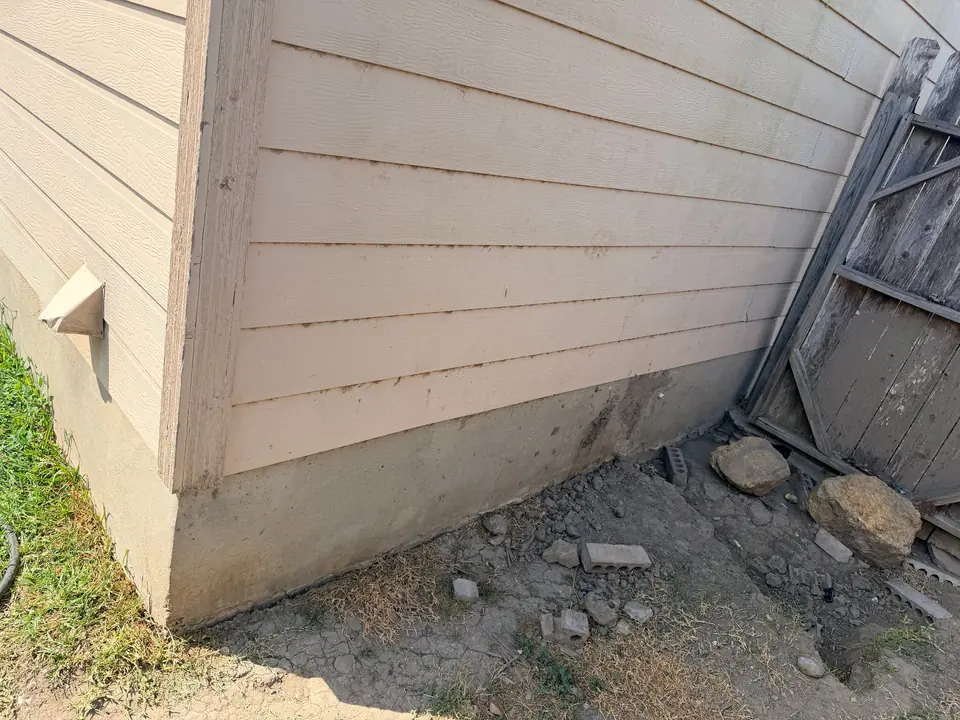
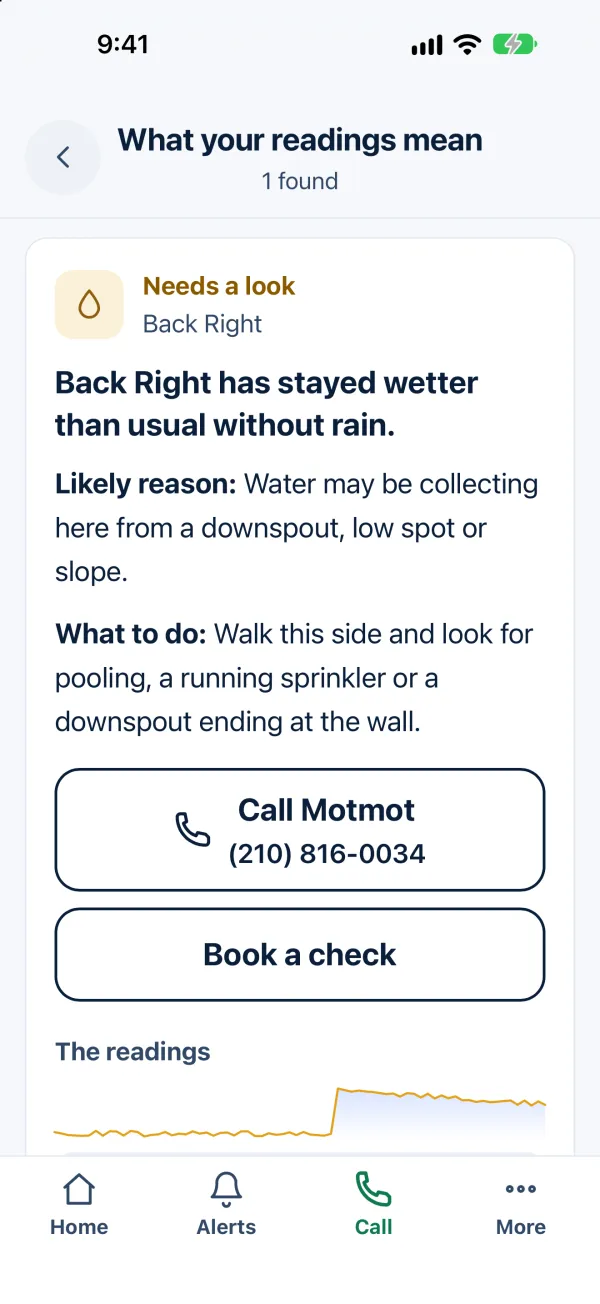
Settling is worth a closer look when the signs keep growing or gather on one side of the house. Cracks wider than about a quarter inch, cracks where one side sits higher than the other, doors and windows that stop latching, floors that slope enough to feel and gaps that open around window frames and trim all point to uneven movement.
Timing matters too. A house that settled a little in its first years and has looked the same since is usually fine. New cracks in an older house, or cracks that open wider every summer, mean something under the house has changed. Our guide to the signs of foundation problems goes through each one.
What causes uneven settling
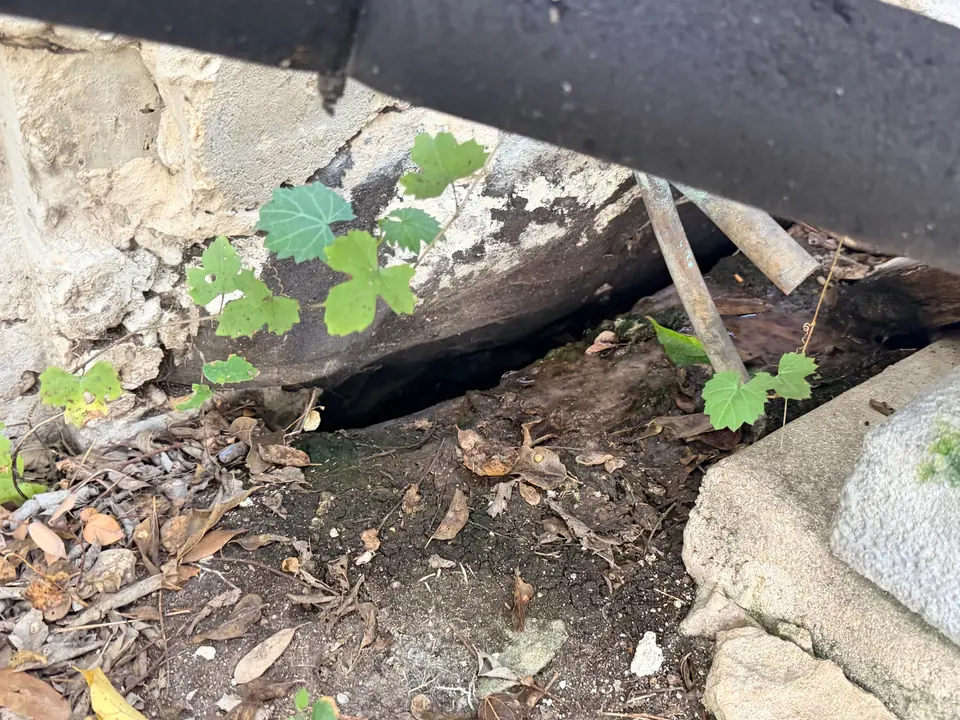
On clay the usual causes are about water. A downspout that empties next to the wall, ground that slopes toward the house, a leak in a line under the slab and an AC drain that drips by the foundation all soak one area. Large trees, a side that bakes in the afternoon sun and a long dry spell with no watering dry out another. The soaked clay swells and lifts while the dry side shrinks and drops.
Some causes have nothing to do with the weather. Fill that was never compacted well, soil washed out by a broken drain line, and a slab poured partly on fill and partly on firm ground can all let one part of the house sink. Our guides on foundation drainage and slab leaks cover the most common water problems.
How settling is measured
A foundation repair company or a structural engineer measures how level the floors are across the house, usually with an elevation meter or a water level, and maps the high and low points. One survey shows the shape of the foundation today. Two surveys months apart show whether it is still moving, which is the question that matters most.
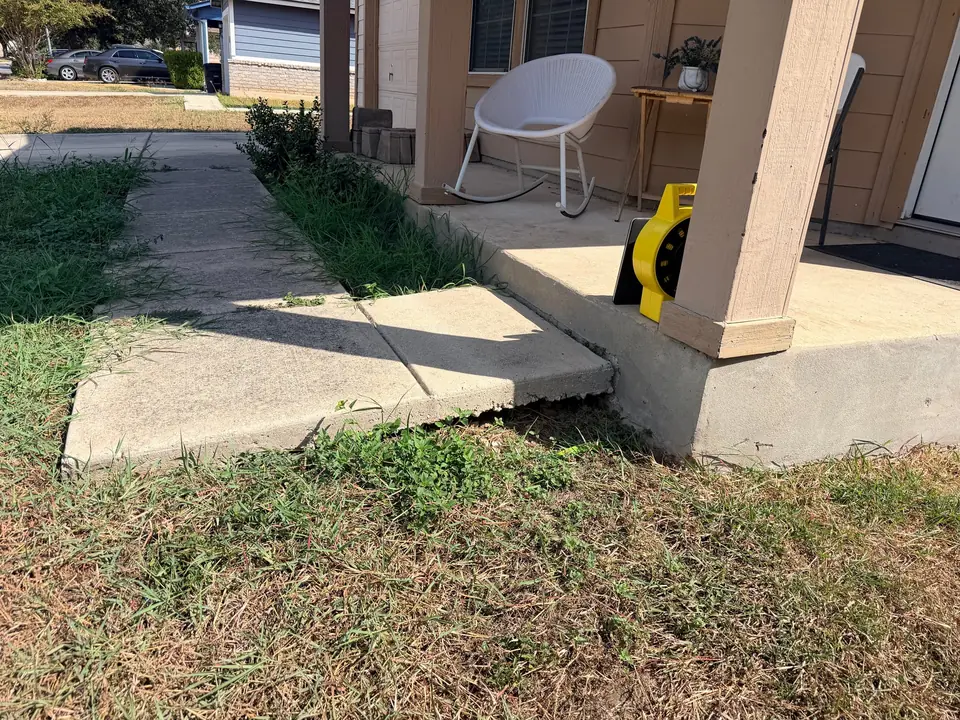
Between surveys, pencil marks and dated photos at the ends of cracks show whether they grow, and soil readings show the likely cause. MoisturePilot reads probes on every side of the house, compares each one with its own usual level and with the other sides, and flags a gap of 18 points or more between sides. A probe out in the open yard shows what the weather alone did, so you can see when one side drifts away from it.
What to do about foundation settling
Start with the water, because a repair holds up better when the cause is fixed. Get the downspouts several feet out, make the ground slope away from the walls, fix any leaks, and keep the soil evenly moist in dry spells. Our guide on whether your foundation watering is enough covers the dry side.
When the house has already moved too far, a slab foundation is usually lifted and supported with piers that reach firmer soil, and a pier and beam house is often releveled by adjusting the piers and shims. Either way, keep watching the soil afterward. Our page for owners after a foundation repair explains why.
Questions people ask
How much foundation settling is normal?
Small, even settling that leaves only hairline cracks is normal, mostly in the first few years. Cracks that keep growing, floors that slope enough to notice and doors that stop latching point to uneven movement that should be checked.
How long does a new house settle?
Most settling happens in the first few years as the soil under the house packs down and the backfill along the walls settles. On clay, the seasonal swell and shrink continues for the life of the house.
Does foundation settling ever stop?
The settling from the weight of the house slows and mostly stops after the first years. Seasonal movement on clay keeps going, and it stays small when the soil moisture is kept even around the house.
Can foundation settling be fixed?
Yes. The first step is fixing the water that caused it, such as poor drainage or a leak. If the house has moved too far, a foundation repair company can lift and support a slab with piers or relevel a pier and beam house.
More guides
Plain answers about the soil around a house. See all guides.
Signs of foundation problems
Doors that start to stick, cracks that keep growing and floors that slope can all point to a house that is moving.
Foundation cracks
Thin, even cracks are common. Wide cracks, offset edges and cracks that keep growing are the ones to watch.
Foundation drainage
Gutters, downspouts and a yard that slopes away do most of the work. Drains come after that.
Register your property
Sensors are $60 each, paid once, a regular home needs 6 or more, and monitoring is $20 a month.