Why is the ductwork under my house sweating?
Ductwork under a house sweats when the cold duct surface drops below the dew point of the humid air in the crawl space, so water forms on it the way it forms on a glass of iced tea. It happens most in Texas summers, when the AC runs hard and the crawl space air is warm and damp. Torn insulation, leaky joints and a wet crawl space make it worse. The drips soak the insulation and the soil below, and over time they can rot wood and feed mold.
Updated November 8, 2026
How condensation forms on ducts
Air holds water as vapor, and warm air holds more than cool air. The dew point is the temperature at which the air has to let some of that water go. When the AC runs, the supply ducts carry cold air, and the outside of the duct gets cold too. If that surface is colder than the dew point of the air around it, water forms on it.
Duct insulation has an outer jacket that keeps the humid air away from the cold surface. When that jacket is torn, crushed or missing, or when a joint leaks cold air into the crawl space, humid air reaches a cold surface and the duct starts to sweat. The more humid the crawl space, the more water you get.
Signs your ducts are sweating
Under the house you may see water dripping from the duct runs, insulation that is wet, sagging or falling apart, rust on bare metal, and a line of wet soil that follows the path of the ducts. Inside, you may notice a musty smell, higher indoor humidity, or stains on the ceiling or floor near a vent.
The pattern is the strongest clue. Sweating ducts are worst on hot, humid days when the AC runs for hours, and they ease off in cooler months when the AC is off. Water that shows up year round, or in one spot instead of along a duct run, points somewhere else.
Sweating ducts or a plumbing leak
Wet soil looks the same whatever made it wet, so the location and the timing do most of the work. A leaking supply line drips all year and usually near a bathroom, the kitchen or the water heater. The AC drain line or a cracked drain pan wets the ground near the air handler. Sweating ducts wet the ground in a line under the duct runs, mostly in summer.
If you cannot tell, a plumber can pressure test the lines and an HVAC technician can check the ducts and the drain. Water under a house can also come from rain, and our guide to water under the house after heavy rain covers that case.
How sweating ductwork is usually fixed
The fix works on both sides of the problem. On the duct side, leaky joints get sealed with mastic or approved tape, torn or soaked insulation gets replaced with insulation that has an intact vapor jacket, and ducts lying on the ground get hung up off the soil. On the air side, the crawl space gets drier. That can mean a vapor barrier over the soil, fixing the rain or plumbing water that gets under the house, and in some houses sealing the crawl space and running a dehumidifier.
Which of these your house needs depends on how it is built and how wet the crawl space is. An HVAC contractor handles the ducts, and a crawl space contractor handles the vapor barrier and any sealing. Fixing only the ducts in a crawl space that floods after every storm rarely lasts.
Catching it with a sensor under the ducts
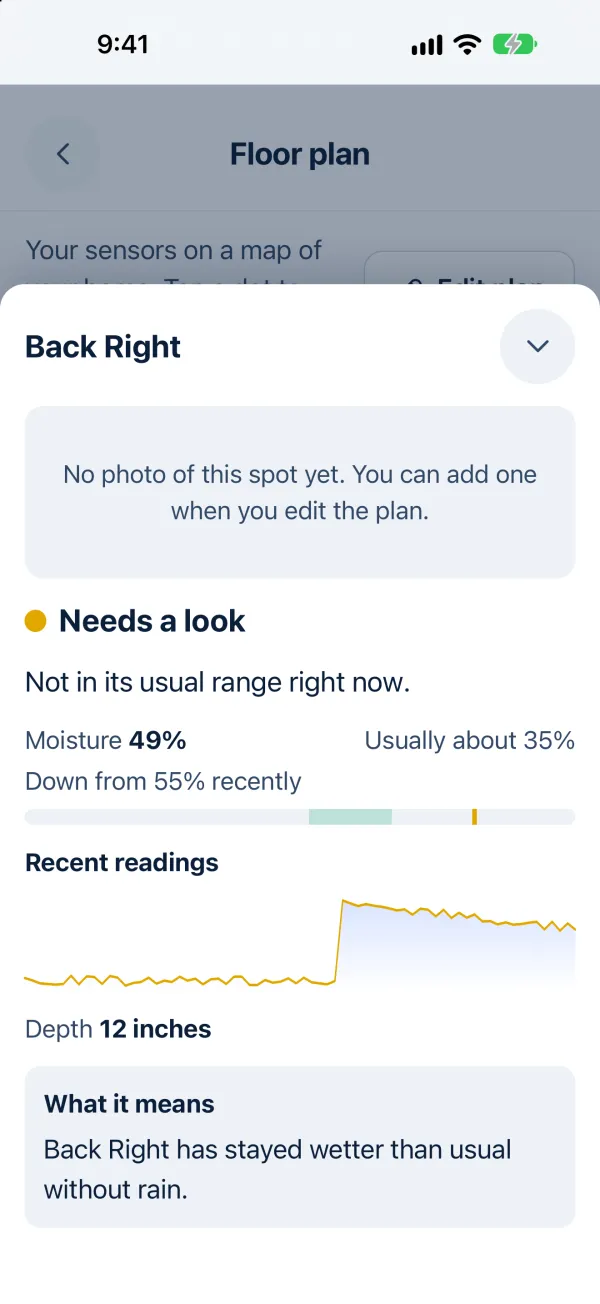
MoisturePilot records what each probe sits near. A probe in the soil under a duct run is marked as near the AC ducts. When that probe gets wetter with no rain, the app flags it and names condensation from the ducts as the likely reason. When a probe is near both plumbing and the ducts, the app names plumbing first, because a leak costs more to leave alone.
The floor plan replays the last 14 days, so you can see whether the wet spot builds during a hot spell and fades when it cools. After the ducts are sealed and insulated, the same probe should settle back toward its usual level. That gives you a way to check the repair without crawling under the house. Our page for pier and beam homes shows where the other probes go.
Questions people ask
Is sweating ductwork under the house a problem?
Over time, yes. The dripping water soaks the insulation so it stops working, wets the soil under the house, and raises the moisture around the floor framing. That can lead to mold, wood rot and higher cooling bills. It is worth fixing before a summer or two of it does damage.
Why do my ducts only sweat in summer?
In summer the AC sends cold air through the ducts while the crawl space air is warm and humid. The cold duct surface drops below the dew point of that air, so water forms on it. In cooler months the AC is off or the air is drier, and the sweating stops.
Can a dehumidifier stop ducts from sweating?
It can help in a sealed crawl space, because drier air has a lower dew point. In a vented crawl space it cannot keep up with the outside air. Sealing the duct joints and repairing the insulation jacket are usually needed either way.
Who fixes sweating ductwork in a crawl space?
An HVAC contractor seals the ducts and replaces damaged insulation. If the crawl space itself is wet from rain, plumbing or bare soil, a drainage or crawl space contractor deals with that part.
More guides
Plain answers about the soil around a house. See all guides.
Normal crawl space moisture
Air humidity, wood moisture and soil moisture are three different numbers. For the soil, your own usual level is the one to watch.
Water under the house after rain
Damp soil that dries in a day or two is common. Water that stands or keeps coming back after every storm is worth fixing.
Pier and beam foundations
A house on piers over a crawl space is easy to reach and repair, and easy to forget about until the floors start to slope.
Register your property
Sensors are $60 each, paid once, a regular home needs 6 or more, and monitoring is $20 a month.