For owners of new homesThe first years of a new house on clay
A new slab sits on soil that was graded, compacted and then left open to the weather. The landscaping is new, the sprinklers are new, and the drainage has never been tested by a real storm. Thin cracks in a new house are common. The ones that keep growing usually trace back to water.
Installed and monitored by our team in Texas.
What tends to go wrong around a new house
Sprinklers set for new sod
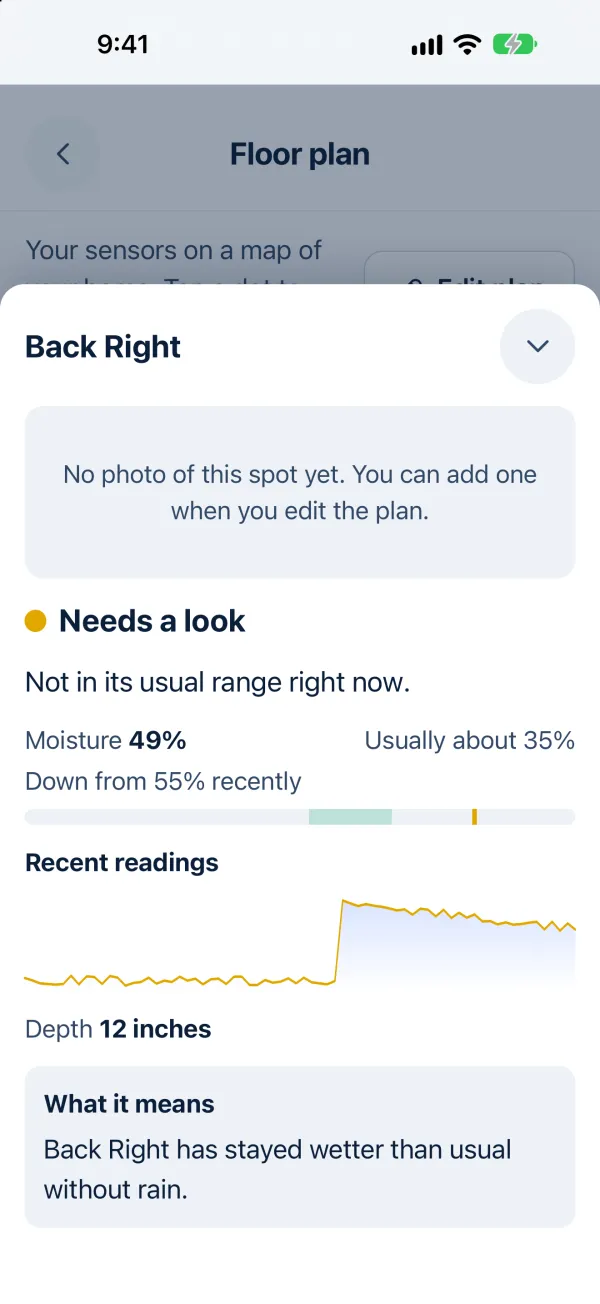
New irrigation is often set to run long so the sod survives. Beds against the slab get soaked on a schedule, and the sensor in that bed reads well above its usual level.
Backfill that settles
Soil along the foundation settles in the first year or two, and a slope that once carried water away can start holding it against the wall.
Missing gutters
Plenty of new houses are handed over without gutters. Roof water lands in a line along the slab and soaks that side after every storm.
A record while the builder warranty applies
Builder warranties run for a set number of years, and they usually expect the owner to keep up drainage, grading and watering.
The app saves every reading with its date, and the floor plan plays back the last two weeks. If a crack shows up, you can show the builder which side changed first in that time.
Questions from owners of new homes
Is it normal for a new house to have foundation cracks?
Thin cracks from concrete shrinking as it cures are common in a new slab, and so are small drywall cracks as the framing dries. Cracks that keep widening, doors that start sticking, or a crack that runs through brick are different, and worth having the builder look at while the warranty applies.
Should I water the foundation of a new house?
On expansive clay, yes, in dry weather and evenly on every side, once the builder's guidance allows it. A new yard often has dry spots along the slab where the sprinklers do not reach and soaked spots where they do. The sensors show which is which.
When should a new homeowner install soil sensors?
Early, so each sensor has a few weeks of its own readings to compare against before the first dry summer.
Guides on this topic
Foundation settling
Small, even settling in the first years is expected. Movement on one side that keeps growing needs a look.
Signs of foundation problems
Doors that start to stick, cracks that keep growing and floors that slope can all point to a house that is moving.
Foundation cracks
Thin, even cracks are common. Wide cracks, offset edges and cracks that keep growing are the ones to watch.
Other people who use MoisturePilot
Register your property
Sensors are $60 each, paid once, a regular home needs 6 or more, and monitoring is $20 a month.