What a foundation inspection includes, and who does it
A foundation inspection is a check of whether a house has moved and why. The inspector walks the outside looking at cracks, the slab edge, grading, gutters and trees, walks the inside checking doors, windows, drywall and floors, and usually measures how level the floors are across the house. A structural engineer writes the result up as an independent report, and a foundation repair company turns it into a repair plan with a price. A home inspector looks for the same signs during a general inspection and refers anything significant to an engineer.
Updated November 8, 2026
Who does a foundation inspection
Three kinds of people do this work, and they answer different questions. A home inspector checks the foundation as one part of a general inspection, looks for signs and refers anything significant to a structural engineer. A structural engineer is a licensed professional who charges a fee, does not sell repairs and writes a report on whether the foundation has moved, the likely cause and what to do about it. Our pages for home inspectors and structural engineers cover how each one uses soil readings.
A foundation repair company also inspects, often for free, and measures the floors much the way an engineer does. Its report comes with a repair proposal from the people who would do the work. Many owners get the engineer first when they are buying a house or the signs are new, then use the report to compare repair bids.
What happens outside the house
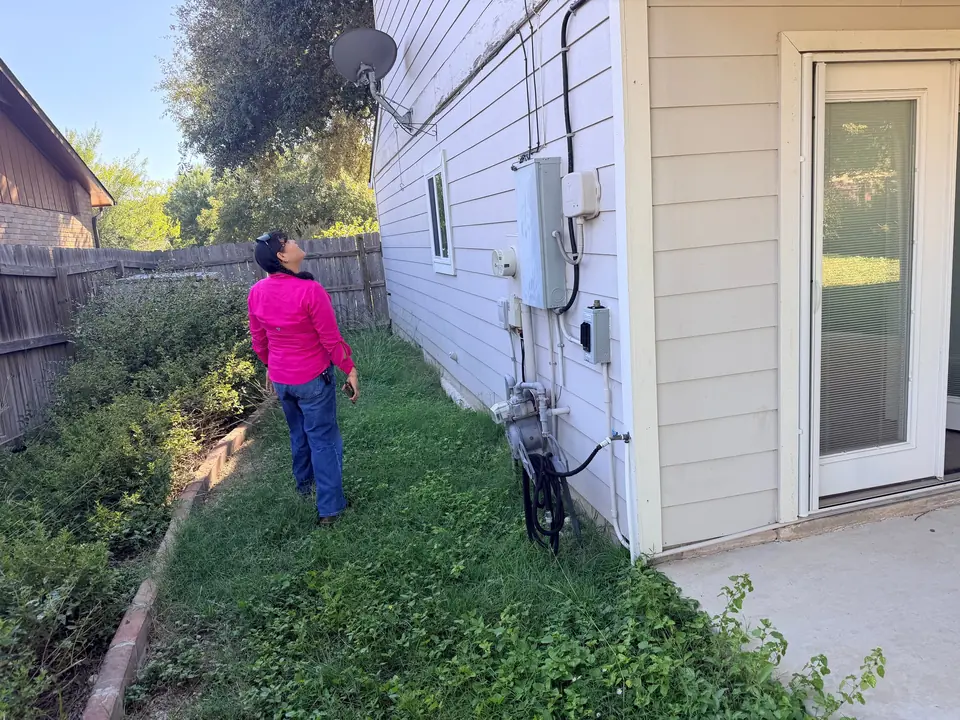
The inspection usually starts outside. The inspector looks for stair step cracks in brick, cracks and corner pops in the exposed slab edge, gaps around window frames and trim, and a slab edge that shows more on one side than another. Then comes the water around the house, meaning the grade next to the walls, where the downspouts let out, low spots that hold water, large trees close to the house and any sign of a plumbing leak.
On a pier and beam house the inspector also goes into the crawl space, where the piers, beams and shims can be seen directly. Wet soil, standing water, rotted wood, sagging beams and piers that have tilted or sunk are noted there. Our guide to pier and beam foundations covers what goes wrong under the floor.
What happens inside the house
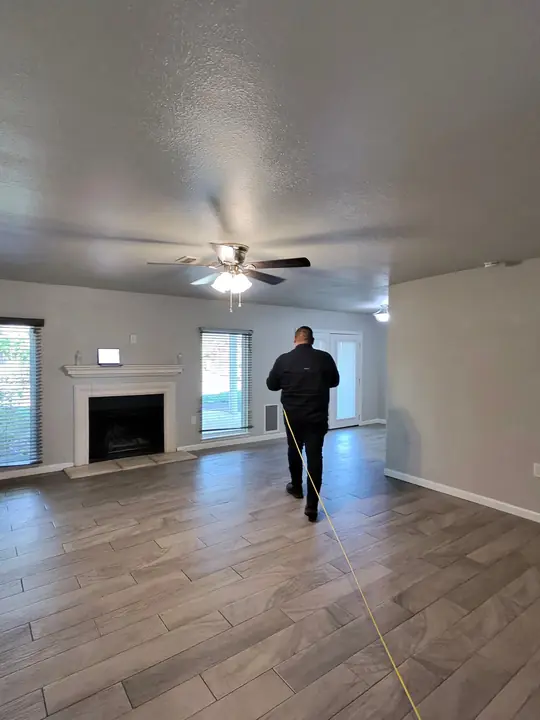
Inside, the inspector opens and closes doors and windows, looks at drywall cracks at the corners of openings and where the walls meet the ceiling, checks tile and other hard flooring for cracks, and notes floors that slope or feel soft. Where the cracks and sticking doors gather tells a lot, because movement under one side of the house usually shows up in several places on that side.
Tell the inspector what you have noticed and when. A door that sticks only in late summer, a crack that appeared after a storm and a plumbing repair last year are all things the inspector cannot see on the day. Our guide to the signs of foundation problems lists what to watch for.
The floor elevation survey
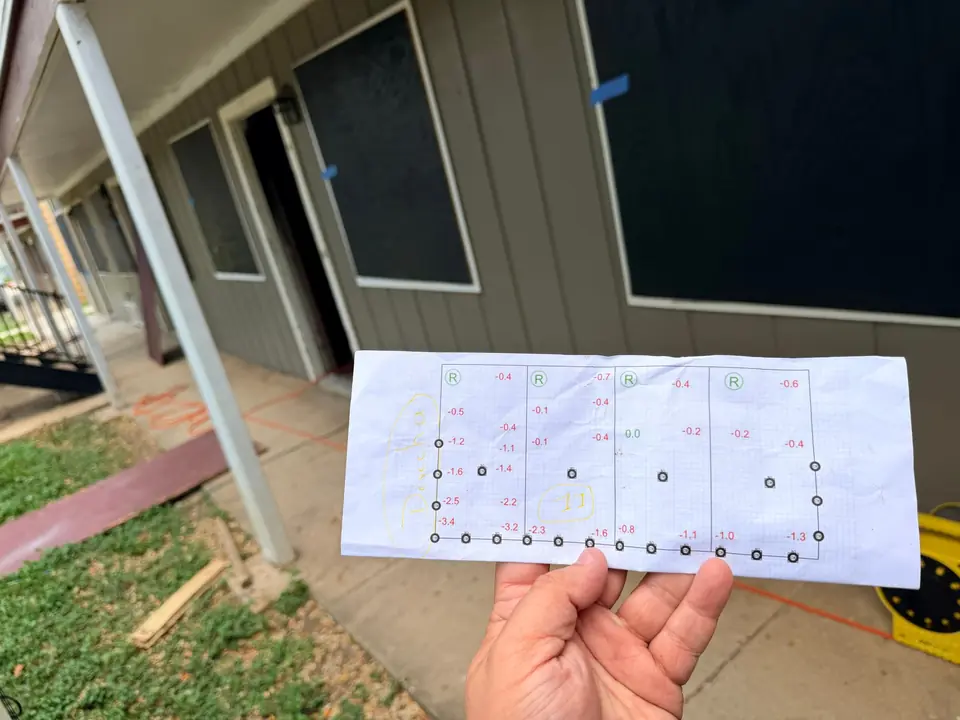
The core of most foundation inspections is a floor elevation survey. The inspector takes level readings at points across the house with an elevation meter or a water level, then plots them as a map of high and low areas. The map shows the shape of the foundation, such as edges that have dropped or a middle that has lifted.
One survey shows the shape today. It cannot tell whether that shape is new, old or still changing, because few slabs were perfectly level the day they were poured. A second survey months later answers that, and our guide to foundation settling explains why the change over time matters more than one set of numbers.
What you get after the inspection
An engineer's report usually says whether the foundation has moved more than is acceptable for that kind of house, what most likely caused it and what to do next. That can be drainage changes, watering in dry spells, a plumbing test when a leak under the slab could be the cause, or a repair plan.
A repair company gives a proposal with the work it recommends, such as the number and placement of piers, and a price, often with a warranty. When the report points to water as the cause, fix that as well, or the same soil keeps moving after the repair. Our guide to foundation drainage covers the usual fixes.
How soil readings fit an inspection
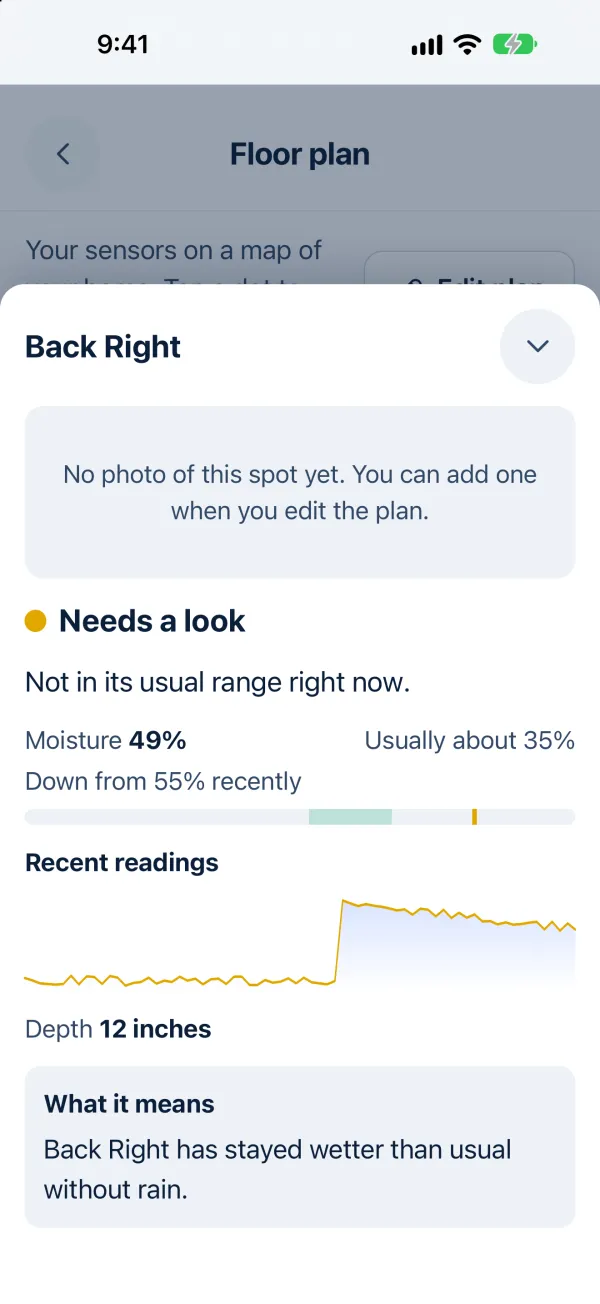
An inspection is one visit, and the soil under a house changes from week to week. When the owner has MoisturePilot sensors in the ground, the app shows each probe's recent readings, its usual level and the last two weeks of status on the floor plan, so the owner can pull up which side has run wetter or drier than usual while the inspector is there.
The readings measure soil moisture only, so they sit beside the elevation survey and never stand in for it. What they add is the part an inspector cannot see in one afternoon, which is how the soil around the house behaved in the two weeks before the visit.
Questions people ask
What does a foundation inspection include?
A walk around the outside for cracks, grading, downspouts and trees, a walk through the inside for doors, windows, drywall and floors, and usually a floor elevation survey. On a pier and beam house it includes the crawl space. The result is a written report or a repair proposal.
Who should inspect my foundation?
A structural engineer for an independent report, especially when you are buying a house or the signs are new. A foundation repair company for a repair plan and a price. A home inspector checks the foundation as part of a general inspection and refers significant signs to an engineer.
Is a foundation inspection worth it when buying a house?
On clay soil it often is, especially when the house shows signs of movement or had a past repair. An engineer's report during the option period tells you what you are buying and gives you something specific to negotiate with.
Can one inspection tell if a house is still moving?
One visit shows the shape of the foundation today. A second elevation survey months later, crack marks with dates and soil readings over time show whether it is still moving.
More guides
Plain answers about the soil around a house. See all guides.
Signs of foundation problems
Doors that start to stick, cracks that keep growing and floors that slope can all point to a house that is moving.
Foundation cracks
Thin, even cracks are common. Wide cracks, offset edges and cracks that keep growing are the ones to watch.
Foundation settling
Small, even settling in the first years is expected. Movement on one side that keeps growing needs a look.
Register your property
Sensors are $60 each, paid once, a regular home needs 6 or more, and monitoring is $20 a month.