What is a normal crawl space moisture level?
There is no single normal crawl space moisture level, because people use the phrase for three different numbers. Air humidity is one, and the EPA advises keeping indoor relative humidity below 60 percent, ideally between 30 and 50. Wood moisture is another, which a pro checks with a meter on the joists and sill. The third is moisture in the soil, which depends so much on your soil and your sensor that the useful normal is your own crawl space's usual level, and the thing to watch is a change from it.
Updated November 8, 2026
Humidity in the crawl space air
Relative humidity is how much water vapor the air holds compared with the most it could hold at that temperature. A cheap hygrometer reads it. The EPA's guide to mold and moisture advises keeping indoor humidity below 60 percent, and ideally between 30 and 50, because mold grows when moisture is left alone.
That advice is written for living space. A vented crawl space shares air with the outdoors, so in a humid Texas summer it follows the weather and reads higher. A sealed crawl space with a dehumidifier can be held near the indoor range. High humidity under the house is what makes cold ducts drip, which our guide to sweating ductwork explains.
Moisture in the wood
The joists, beams and sill plate are what the moisture can actually damage. Damp wood grows mold, rots over time and draws termites. A crawl space contractor or inspector measures it with a moisture meter pushed into the wood, and they will tell you whether the reading is a concern for that house.
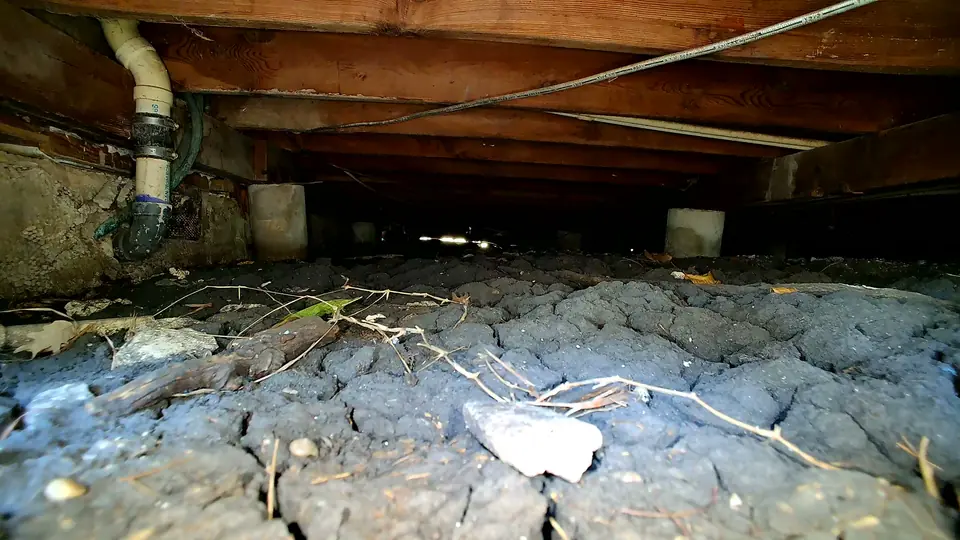
You can look for the signs yourself with a flashlight. Dark staining, a white or fuzzy growth, wood that feels soft when you press a screwdriver into it, and insulation that has fallen from between the joists all mean the wood is staying wet.
Moisture in the soil under the house
Soil sensors report volumetric water content as a percent, meaning how much of the soil is water. That number depends on the soil itself. Clay holds far more water than sand, and two probes in the same crawl space can read differently because of how tightly the soil packs around them. A reading of 45 percent can be ordinary at one home and a warning at another.
So there is no honest single number for normal crawl space soil. Anyone who gives you one without knowing your soil is guessing. What does carry meaning is how a spot behaves over time, and whether it is changing.
Why your own usual level is the number to watch
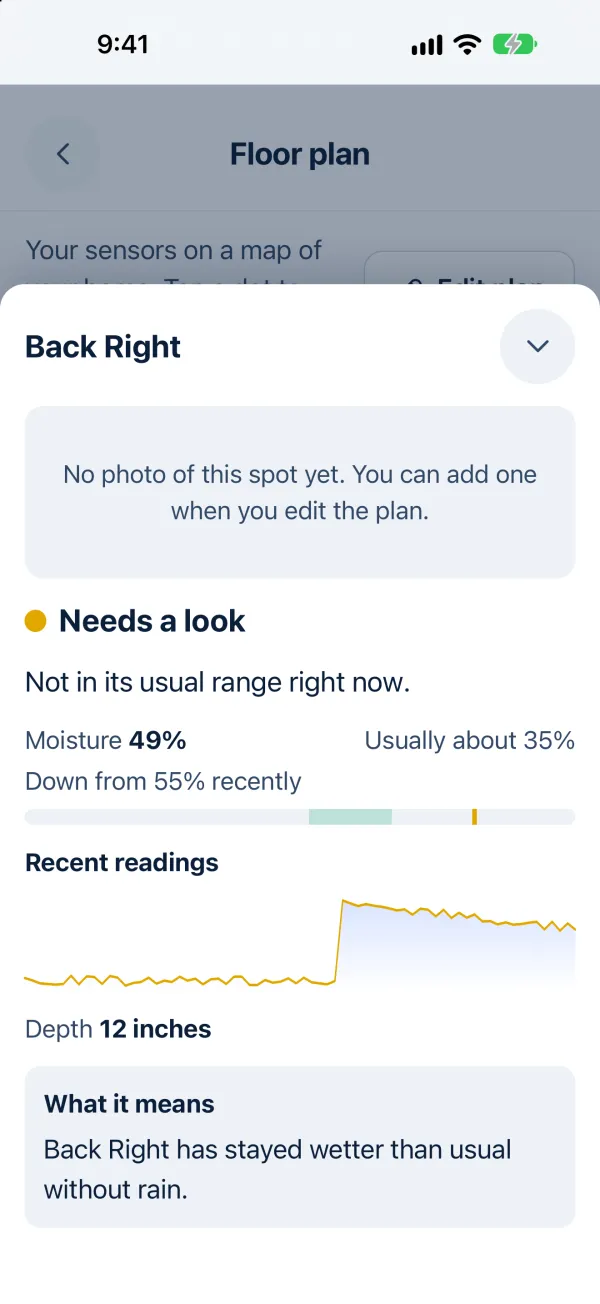
MoisturePilot judges each probe against its own usual level, which is the middle of its readings over the last three weeks with the newest three days left out. A wet spell that is still going on does not get counted as usual.
From there the app looks for changes. It flags a spot that rises 8 points or more in a day with almost no rain, a spot that stays well above its usual level after the rain has stopped, and a spot reading well below its usual level in dry weather. A probe out in the open yard shows what the weather alone did. Each probe is recorded with what it sits near, such as plumbing, the AC drain or the ducts, so an alert can name the likely reason.
Signs your crawl space has too much moisture
Standing water after rain, a musty smell in the house, condensation dripping from ducts or pipes, damp insulation falling down, mold on the wood, and floors above that feel soft or bouncy are the common signs. Wood floors that cup or gaps that change with the seasons can point the same way.
Too much moisture almost always has a source. Rain getting under the house is the most common, and our guide to water under the house after heavy rain covers it. Plumbing leaks and the AC drain line are the next places to look.
What to do when the crawl space is too wet
Find the source first. Fixing gutters, downspouts, grade or a leak removes the water at its start, and nothing else works for long while it keeps coming. After that, a crawl space contractor can look at a vapor barrier over the soil, a sump for water that still collects, and whether sealing and dehumidifying the crawl space makes sense for your house. Sensors in the soil show whether each fix made the ground drier after rain. Our page for pier and beam homes shows where they go.
Questions people ask
What humidity should a crawl space be?
The EPA advises keeping indoor relative humidity below 60 percent, ideally between 30 and 50. A sealed crawl space with a dehumidifier can be held near that range. A vented crawl space follows the outside air, so it reads higher in a humid summer.
What is a normal soil moisture reading in a crawl space?
There is no single normal number, because the reading depends on the soil type and how the probe sits in it. The useful normal is the spot's own usual level over the past few weeks. A spot that rises sharply with no rain or stays well above its usual level is the one to look into.
How do I know if my crawl space has too much moisture?
Signs include standing water after rain, a musty smell, damp or rotting wood, wet insulation falling down, dripping ducts and floors that feel soft or bouncy. A soil sensor in the crawl space puts a number on it and shows whether it dries out after a storm.
Does a vapor barrier fix crawl space moisture?
It slows moisture rising from the soil into the crawl space air. It does not stop rain or a leak from wetting the ground under it, so the water source still has to be fixed first.
More guides
Plain answers about the soil around a house. See all guides.
Water under the house after rain
Damp soil that dries in a day or two is common. Water that stands or keeps coming back after every storm is worth fixing.
Sweating ductwork under the house
Cold ducts in humid crawl space air collect water like a glass of iced tea, and the drips soak the soil and wood below.
Pier and beam foundations
A house on piers over a crawl space is easy to reach and repair, and easy to forget about until the floors start to slope.
Register your property
Sensors are $60 each, paid once, a regular home needs 6 or more, and monitoring is $20 a month.