What a slab leak is, and the signs you can catch early
A slab leak is a leak in a water or drain line under the concrete slab of a house. The earliest signs are often small and easy to check. A water meter that moves with every tap closed, the sound of running water when nothing is on, and soil along the slab that stays wet with no rain can all show up before the bill does. Inside, look for a warm spot on the floor, damp flooring and new cracks. None of these proves a leak. A plumber confirms it with a pressure test on the water lines, or a camera and a drain test on the drain lines.
Updated November 8, 2026
What a slab leak is
In many houses built on a slab, the water supply lines run through the ground under the concrete, so a leak there stays out of sight. Copper lines can wear through where they rub against concrete or gravel as the house moves, corrode from the outside in some soils, or fail at a joint. Hot water lines leak more often, partly because they expand and shrink each time hot water runs through them.
Drain lines under the slab can leak too. They only carry water when something drains, so they do not move the water meter, and a plumber finds them with a camera or by testing the drain system. Either kind of leak puts water into the soil under the house.
Why the water bill is a late sign
A small leak in a line under the slab may lose only a little water an hour. The bill comes once a month and covers a whole month of use, so a slow leak can run for weeks before the total looks wrong, and a hot summer of yard watering can hide it longer. By then the water has been soaking the clay under the slab the whole time.
On expansive clay that matters more than the money. The wet soil swells under one part of the slab and lifts it. When the leak is fixed and that soil dries, it can shrink back. Catching a leak early keeps it a plumbing repair.
Slab leak signs you can check yourself
The meter test is the most useful. Close every faucet and make sure the dishwasher, washer, ice maker and sprinklers are off. Then look at the water meter. Most meters have a small leak indicator dial, often a triangle or star, that spins with even a tiny flow. If it moves with everything off, water is going somewhere.
Other signs include the sound of running water at night, a warm or damp spot on the floor, which points to the hot water line, flooring that cups or lifts, a musty smell from one room, a water heater that seems to run all the time, lower water pressure, and new cracks in floors or walls. Outside, a flower bed or one strip of yard along the slab that stays wet in dry weather is a sign worth taking seriously.
What soil readings can add
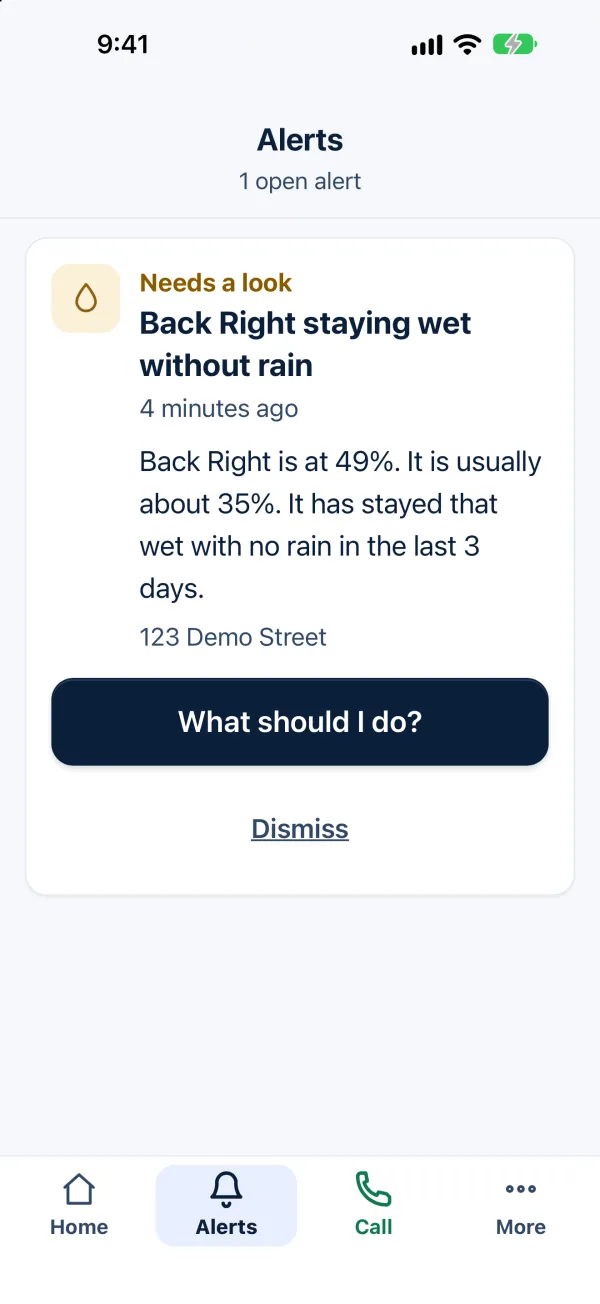
A soil moisture probe placed near where the main plumbing runs can show the soil getting wetter before you notice anything else. MoisturePilot flags a probe that rises 8 points or more in a day with almost no rain, and one that stays well above its usual level for days without rain. It checks the rain records for your address before it calls a rise unexplained.
If the probes on the other sides stayed flat that day, the water is local to that zone. When the probe is recorded as near plumbing, the app names a possible plumbing leak as the likely reason. That tells you which part of the house to have tested first. Our page for plumbers explains how they use the same readings.
What a sensor cannot tell you
A probe only knows about water that reaches it. A leak under the middle of a large slab may take a long time to spread to the soil where a probe sits, and some never reach one at all. So the sensors add a sign to the list. They do not replace the meter test, and a quiet sensor does not mean there is no leak.
The readings also cannot say where along the line the leak is, or confirm that it is a leak at all. A sprinkler line, a hose bib or a downspout can wet the same soil. That is why the app says possible and likely, and why a plumber makes the call.
How plumbers handle slab leak detection
A plumber usually starts by isolating the lines, often hot from cold, and pressure testing each one to see which is losing water. Then they pinpoint the spot with acoustic listening equipment, electronic line location or thermal imaging for hot lines. The repair might be a spot repair through the slab, a reroute through the walls or attic, or a repipe.
After the repair, the soil near the leak should dry back down toward where it sat before. A probe near that line shows the drop, which helps if the leak caused movement and a foundation repair is part of the story. If the reading never comes down, have the plumber come back.
Questions people ask
What are the first signs of a slab leak?
Often a water meter that moves with every fixture off, running water heard when nothing is on, a warm or damp spot on the floor, and a strip of soil along the slab that stays wet in dry weather. A higher water bill usually comes later.
How do I check for a slab leak at home?
Turn off every faucet and water appliance, including sprinklers and the ice maker, then watch the leak indicator on your water meter. If it moves with everything off, water is going somewhere. Call a plumber to find out where.
Can a soil moisture sensor detect a slab leak?
It can show a possible sign. A probe near the plumbing that rises sharply or stays wet with no rain points to a possible leak in that part of the house. It cannot confirm a leak or find its exact spot, and a leak that never reaches a probe goes unseen. A plumber confirms it.
What causes a slab leak?
Usually a copper line that wears through where it rubs against concrete or gravel, corrosion from the soil, or a failed joint. Movement of the slab on clay adds stress to the lines, and hot water lines leak more often than cold ones.
Can a slab leak damage a foundation?
Yes, on expansive clay. The water swells the soil under one part of the slab, and that uneven movement can crack floors and walls. Finding the leak early keeps it a plumbing repair.
More guides
Plain answers about the soil around a house. See all guides.
Signs of foundation problems
Doors that start to stick, cracks that keep growing and floors that slope can all point to a house that is moving.
Is your foundation watering enough?
The hose schedule and the yard surface do not show what the clay a foot down is doing. Measuring each side does.
WiFi soil moisture sensors for a foundation
They can, if the probes sit about a foot down around the whole house and each one is read against its own history.
Register your property
Sensors are $60 each, paid once, a regular home needs 6 or more, and monitoring is $20 a month.