Foundation cracks, and how to tell which ones are serious
Most foundation cracks are thin shrinkage cracks that formed as the concrete cured, and they are usually not a structural problem. A foundation crack is more serious when it is wider than about a quarter inch, when one side sits higher than the other, when it is wider at one end, or when it keeps growing. Cracks that show up with other signs on the same side of the house, such as a sticking door or a stair step crack in the brick, point to soil moving under that part of the house. On Texas clay that movement usually comes from water.
Updated November 8, 2026
Hairline cracks in a slab
Concrete shrinks as it dries and cures, and almost every slab cracks a little as it does. These cracks are thin, often too narrow to slide a credit card into, and they tend to run in straight or wandering lines across the slab. You see them in the garage floor, or under carpet and tile when the flooring comes up.
Shrinkage cracks usually stop growing after the first year or two, and the two sides stay level with each other. Flooring laid over them can still crack along the same line, especially tile, which is why one cracked tile alone does not prove the foundation moved.
Corner cracks and cracks in the slab edge
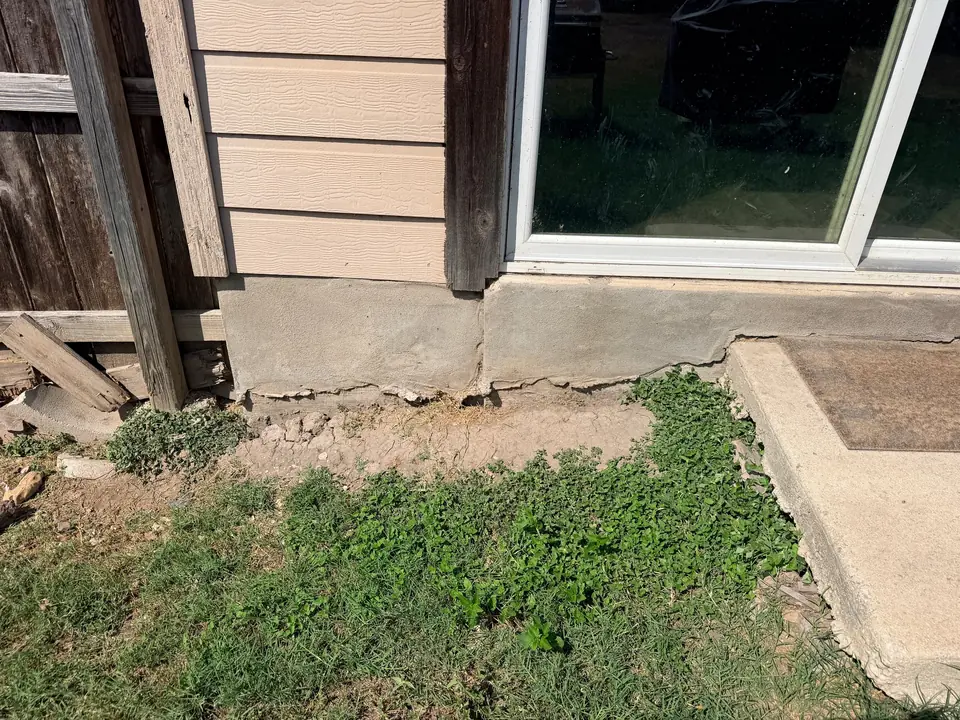
A small triangle of concrete that breaks off a corner of the slab, often right under the brick, is common enough to have a name, a corner pop. It usually comes from the brick and the concrete moving at different rates as they heat and cool, or from the concrete shrinking, and it rarely means the foundation moved. It is still worth sealing so water and insects stay out.
A crack that runs down the exposed edge of the slab is a different matter when it is wide or one side sits higher. On most Texas slabs that edge is a thickened beam that carries the outside walls, and a crack there that opens wider every season suggests that part of the foundation is moving as the soil under it changes.
Stair step cracks in brick
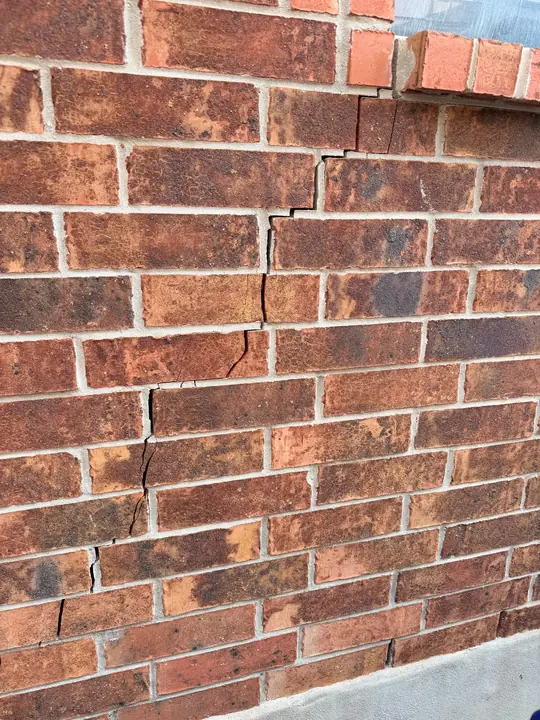
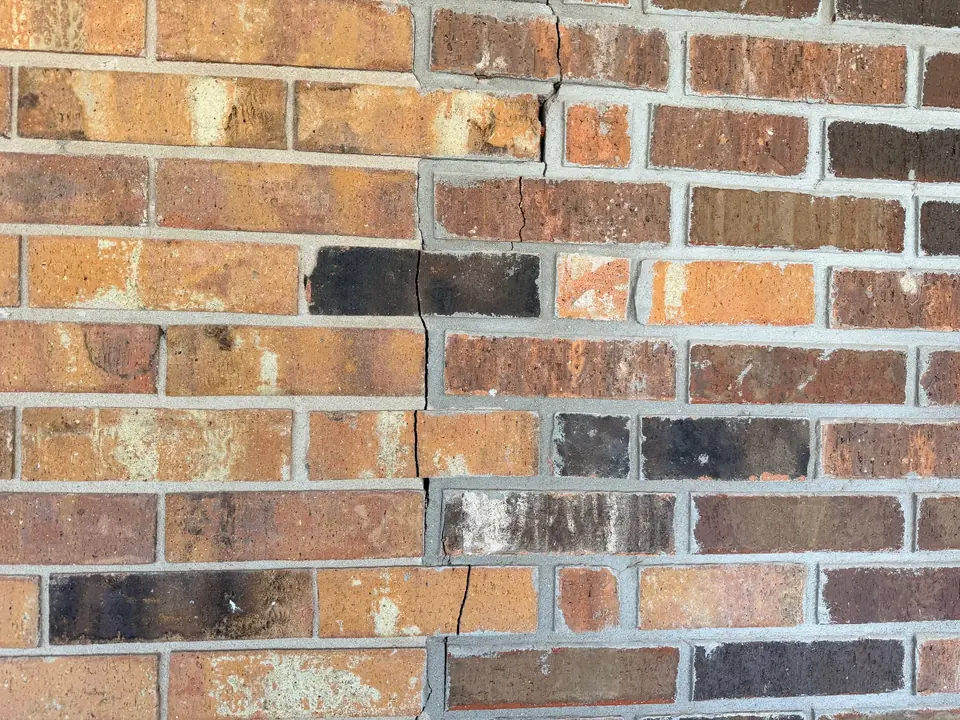
Brick cannot bend, so when the foundation under it moves, the mortar cracks along the joints in a stair step pattern. A stair step crack that starts at the corner of a window or door and runs down toward the foundation is one of the clearest signs that one part of the house has dropped or lifted.
The shape of the crack shows which way the wall moved. A crack that is wider at the top usually means the ends of that wall dropped or the middle lifted, and one that is wider at the bottom usually means the middle dropped or the ends lifted. Bricks that have cracked through instead of along the mortar, and a gap between the brick and a window frame, point to more movement.
Drywall and floor cracks inside the house
Inside, cracks that run at an angle from the corners of doors and windows, cracks along the line where the wall meets the ceiling, and tile that cracks in a line across several pieces usually go with movement below. Small drywall cracks at a seam that open and close with the seasons are common on clay and are usually cosmetic.
Our guide to the signs of foundation problems covers the doors, floors and outside signs that tend to show up with these cracks.
How to measure and track a foundation crack
Measure the widest point with a ruler or a crack width card, and run a fingertip across the crack to feel whether one side sits higher. Then mark both ends with a pencil line and the date, and take a photo with a ruler next to it. A plastic crack monitor, which spans the crack and shows movement on a small grid, makes changes easy to read.
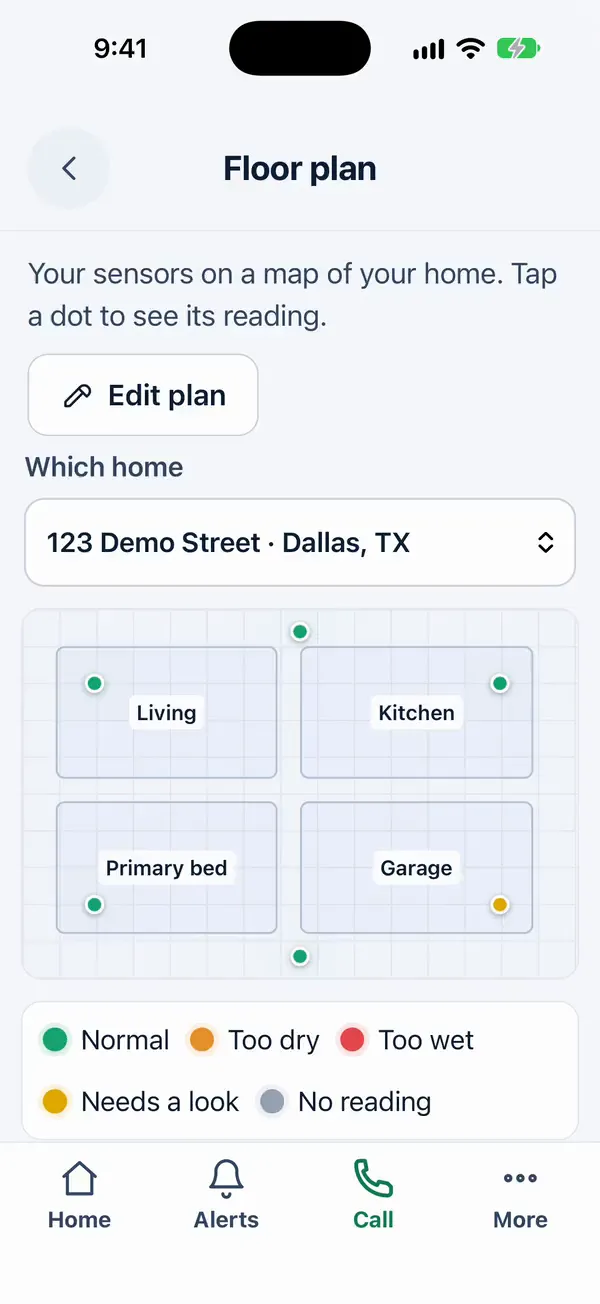
Check again every few weeks and note the weather. A crack that grows past its marks is still moving. One that opens in late summer and closes after the fall rains is following the seasonal swell and shrink of the clay, though a crack that opens a little wider each year still needs a look. Each time you check, the MoisturePilot floor plan shows the last two weeks for each probe, so you can see whether the soil on that side was drier or wetter than the rest.
What to do about a foundation crack
A thin crack that is not growing can be sealed with a concrete crack filler or an epoxy to keep out water and insects, and that is usually all it needs. A crack that is wide, offset or growing calls for an inspection by a structural engineer or a foundation repair company before anyone seals it, because sealing hides the crack without stopping the movement.
When the cause is water, fix that too. Downspouts that empty next to the wall, ground that slopes toward the house and a leak under the slab can all move the soil under one side, and our guides on foundation drainage and foundation settling explain how. After a repair, the same pencil marks show whether the crack has stayed put.
Questions people ask
When should I worry about a foundation crack?
When it is wider than about a quarter inch, when one side sits higher than the other, when it is wider at one end, or when it keeps growing. Cracks that show up with sticking doors or stair step cracks in brick on the same side of the house are also worth an inspection.
What does a horizontal foundation crack mean?
In a basement or block wall, a horizontal crack usually means the soil outside is pushing the wall inward, and a structural engineer should look at it soon.
Can I fix a foundation crack myself?
A thin crack that is not growing can be sealed with a concrete crack filler or epoxy to keep out water and insects. A wide, offset or growing crack needs an inspection first, because sealing it does not stop the movement that caused it.
Do foundation cracks get worse?
Shrinkage cracks usually stay the same after the first year or two. Cracks caused by soil movement often grow, especially when one side of the house keeps getting wetter or drier than the rest. Pencil marks with dates at both ends show which kind you have.
More guides
Plain answers about the soil around a house. See all guides.
Signs of foundation problems
Doors that start to stick, cracks that keep growing and floors that slope can all point to a house that is moving.
Foundation settling
Small, even settling in the first years is expected. Movement on one side that keeps growing needs a look.
Foundation drainage
Gutters, downspouts and a yard that slopes away do most of the work. Drains come after that.
Register your property
Sensors are $60 each, paid once, a regular home needs 6 or more, and monitoring is $20 a month.