For home buildersSoil records for new homes on clay
After handover, the homeowner controls the water. They change the sprinkler schedule, plant beds against the slab and skip watering in a drought. When a foundation claim comes in, the first question is what the soil has been doing, and there is rarely a record to answer it.
Installed and monitored by our team in Texas.
What builders use it for
A record from day one
Sensors installed at handover are reading before grading settles and the landscaping goes in, so the first changes show up as they happen.
A record to check when a claim comes in
When a crack is reported, the floor plan plays back the last two weeks, so you can see which side changed and when.
Owners who water evenly
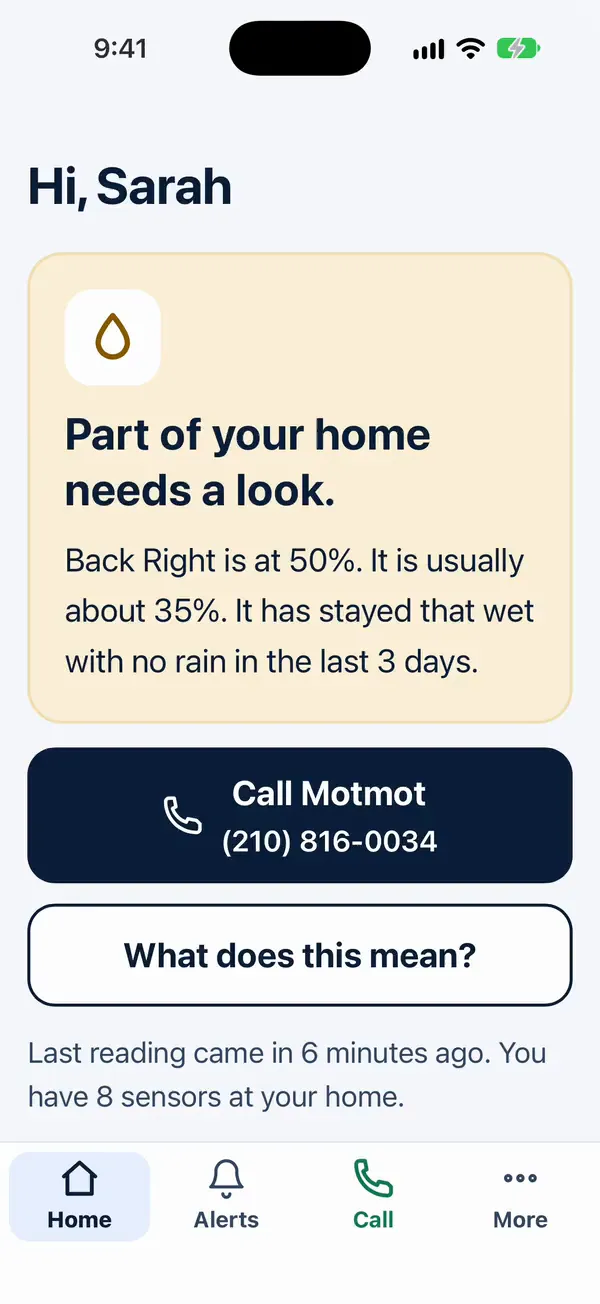
Homeowners see when one side reads drier than the rest, and the app answers watering questions in plain words. That is the upkeep a builder's homeowner guide usually asks for.
Offering it to your buyers
Talk to us about installing sensors in new homes, either before closing or as an option your buyers can choose.
Builder accounts are arranged directly. The homeowner owns the sensors and can share the record with you for as long as they choose.
Questions from home builders
What causes foundation claims on new homes?
Concrete shrinks as it cures, which leaves thin cracks in most slabs. Larger movement in the first years usually traces to changes in soil moisture, such as settling backfill, irrigation against the slab, missing gutters or a first dry summer.
Who is responsible for foundation maintenance on a new home?
After handover, usually the homeowner, for drainage, grading and watering. The builder's warranty covers defined structural defects for a set term. A dated soil record helps both sides see what happened.
Can builders see the readings for homes they built?
Yes, when the homeowner shares the property with your mobile number. Access is the owner's choice, and they can remove it at any time.
Other people who use MoisturePilot
Register your property
Sensors are $60 each, paid once, a regular home needs 6 or more, and monitoring is $20 a month.